Overclock
The year is 2089.
And humanity has built something vast enough to hold the world together: the Spine, a planetary neural network pulsing with data, connection, and control.
But now, it is disappearing. Piece by piece…
A rogue program known as the Kill-Code is tearing through the network, erasing it from existence one section at a time. And somewhere in the middle of that unraveling system, you’re the netrunner, the protagonist tasked with rebuilding the Spine before there is nothing left to save.
That means rebuilding while everything around you is still collapsing. Recovering what can still be recovered. Expanding through what remains. And trying to stay one step ahead of a threat that never stops.
Do you have what it takes to save the day?
Entry: before playing the game
First impression
Cyberpunk isn’t exactly a setting I’ve explored a LOT through print-and-play games, so Overclock already had me there.
The whole idea of a rogue program slowly erasing humanity’s neural network feels like a cyberpunk classic. It’s slightly ironic playing a game set in 2089 and realizing that parts of its premise don’t feel quite as distant anymore.
With AI finding its way into pretty much everything around us, something that might once have felt purely futuristic now feels… not so futuristic and weirdly relatable!
If you know, you know.
Then there’s the other bit that had me grinning: this is a 4X game. Explore, Expand, Exploit, Exterminate.
Those games are usually known for being BIG. Big maps, big systems, big sessions. So trying to squeeze that whole idea into a setup of just 36 cards is by no means an easy task. Yet that’s exactly what Soliman, the creator of Overclock, set out to do.
Here’s what Soliman said:
“I wanted to make a 4x game. Explore, expand, exploit, exterminate. The full package. But I also wanted it to fit the PnP requirements. 36 cards, a few dice, some tokens. That’s it. 4x games are big. They spread across tables. They have tech trees and unit stacks and resource boards. Games like Twilight Imperium take an entire day. How do you compress all of that into something smaller than most card games? And how do you make it solo? I didn’t have a good answer when I started. But I took a step-by-step approach.”
The conversation I had with Soliman ended up becoming one of the most in-depth Behind-the-Scenes issues I’ve covered to date. If you’re interested in what went into creating Overclock, you can check it out here.
So… a solo 4X wrapped in a classic cyberpunk narrative, packed into 36 cards, with the whole experience feeling NOT solo?
Consider me VERY enticed.
A bit on the game
Overclock is a solo 4X card game played over six cycles, with one main objective: rebuild as much of the Spine as possible before the Kill-Code wipes it out.
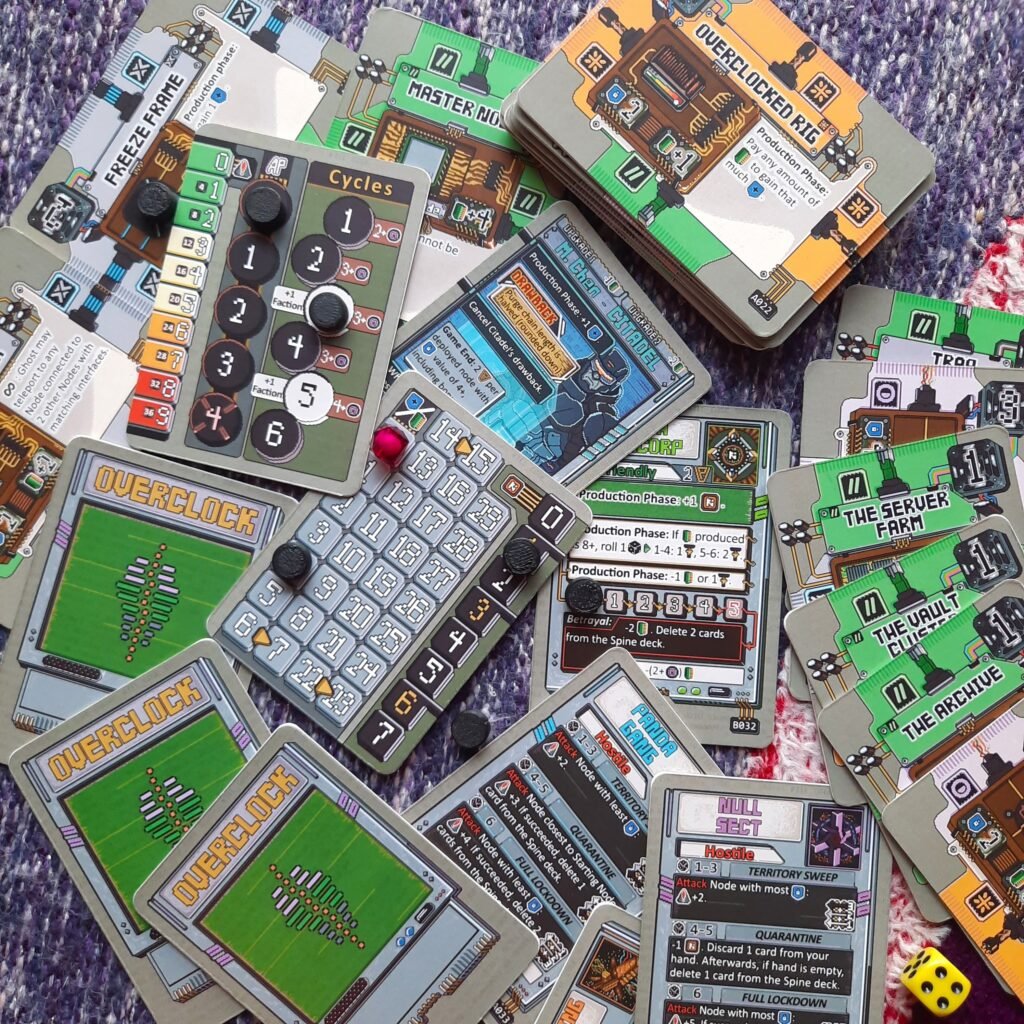
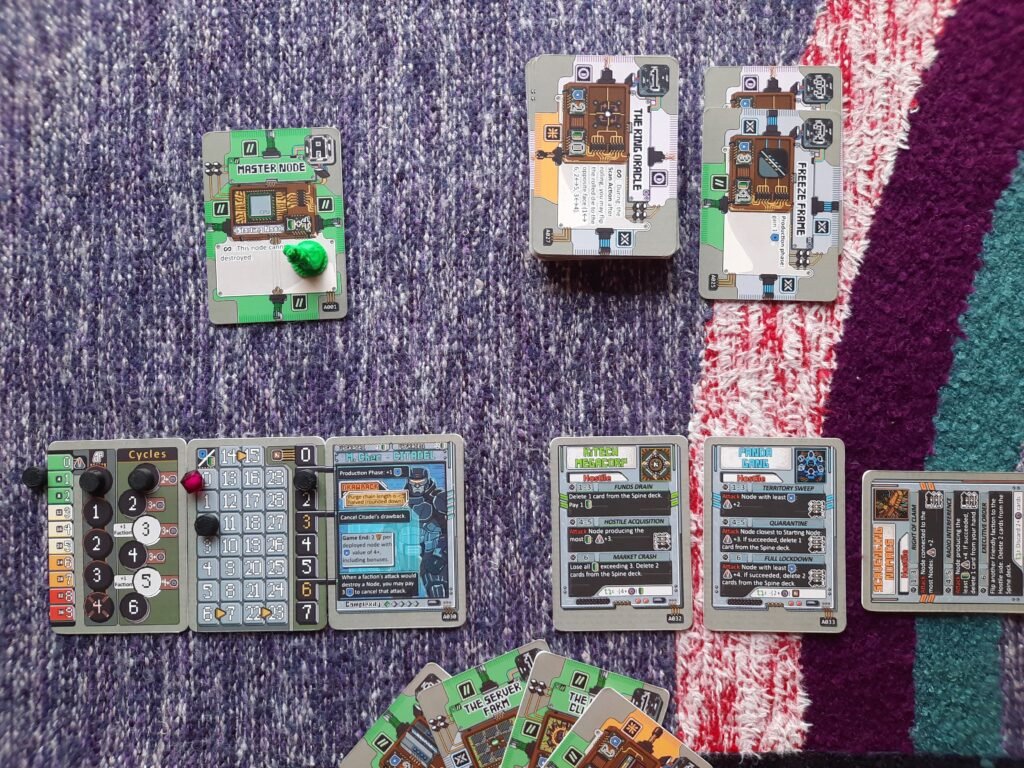
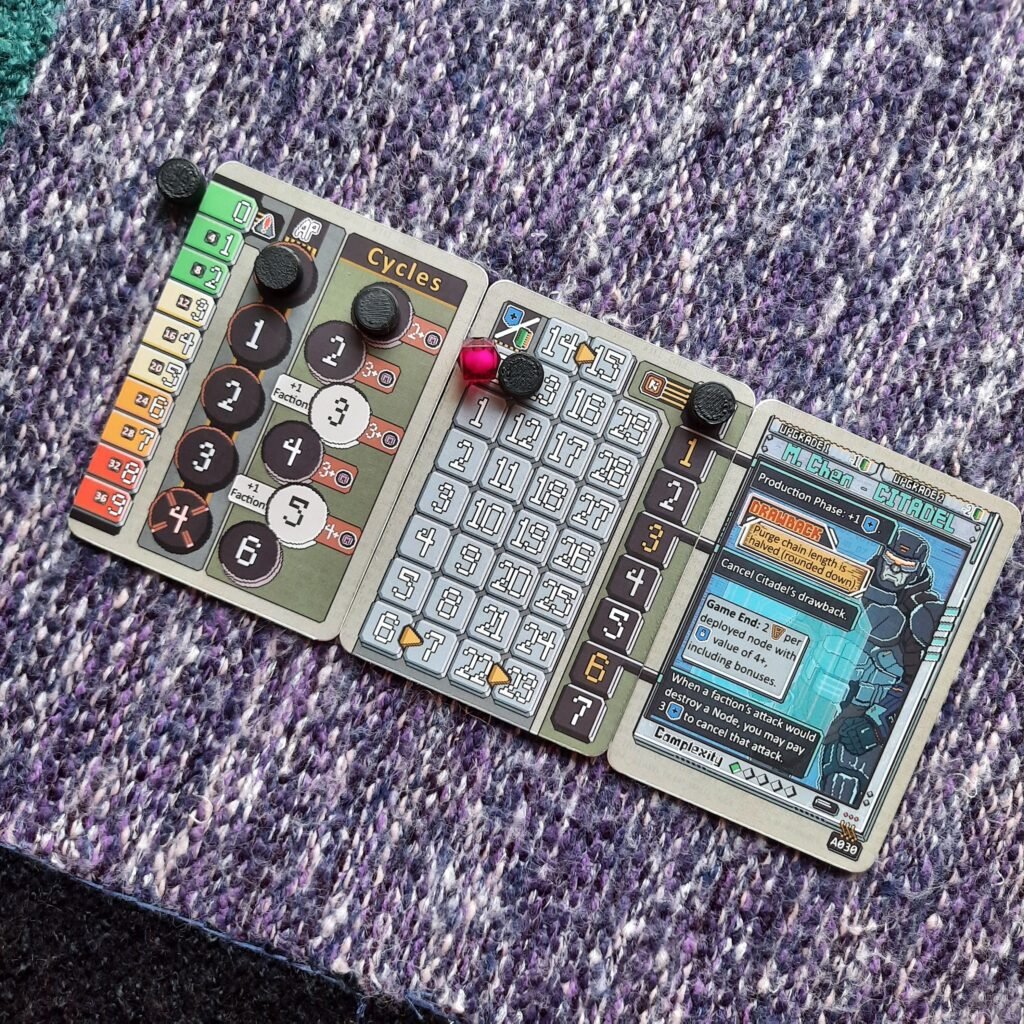
You begin with a starting node, a netrunner (Ghost), a handful of cards, three resources to manage, and four factions. Each cycle moves through five phases: Production, Actions, Factions, Kill-Code, and Cleanup.
During Production, your deployed nodes generate resources. Then comes the Actions phase, where you normally get three main actions to work with.
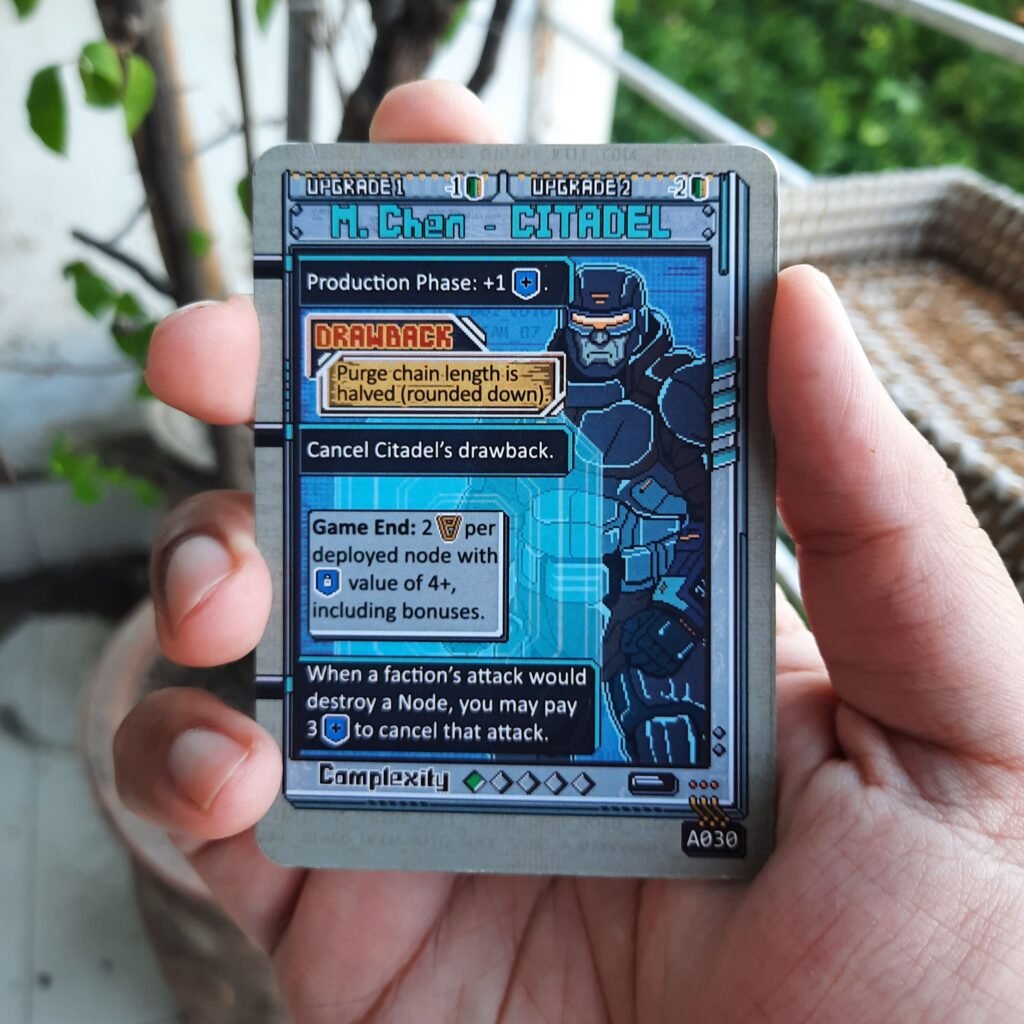
This is where most of the rebuilding happens. You can Scan the Spine to pull new cards into your hand, Deploy nodes to physically expand your network, Purge deleted data back into the Spine, use cards as Programs and Upgrades, or hold onto Sentinels until their trigger comes up.
Every node/item card can either become part of your growing network or be used for the item on its other side. You don’t get both.
As the network expands, the interfaces printed along the edges of your cards begin connecting with one another. Matching interfaces can make movement cheaper, help build longer Purge routes, and reward you with Ki-Coin when new nodes are deployed. Ghost moves around this network too, and your position matters for actions like Deploying and Purging, as well as for defending nodes later on.
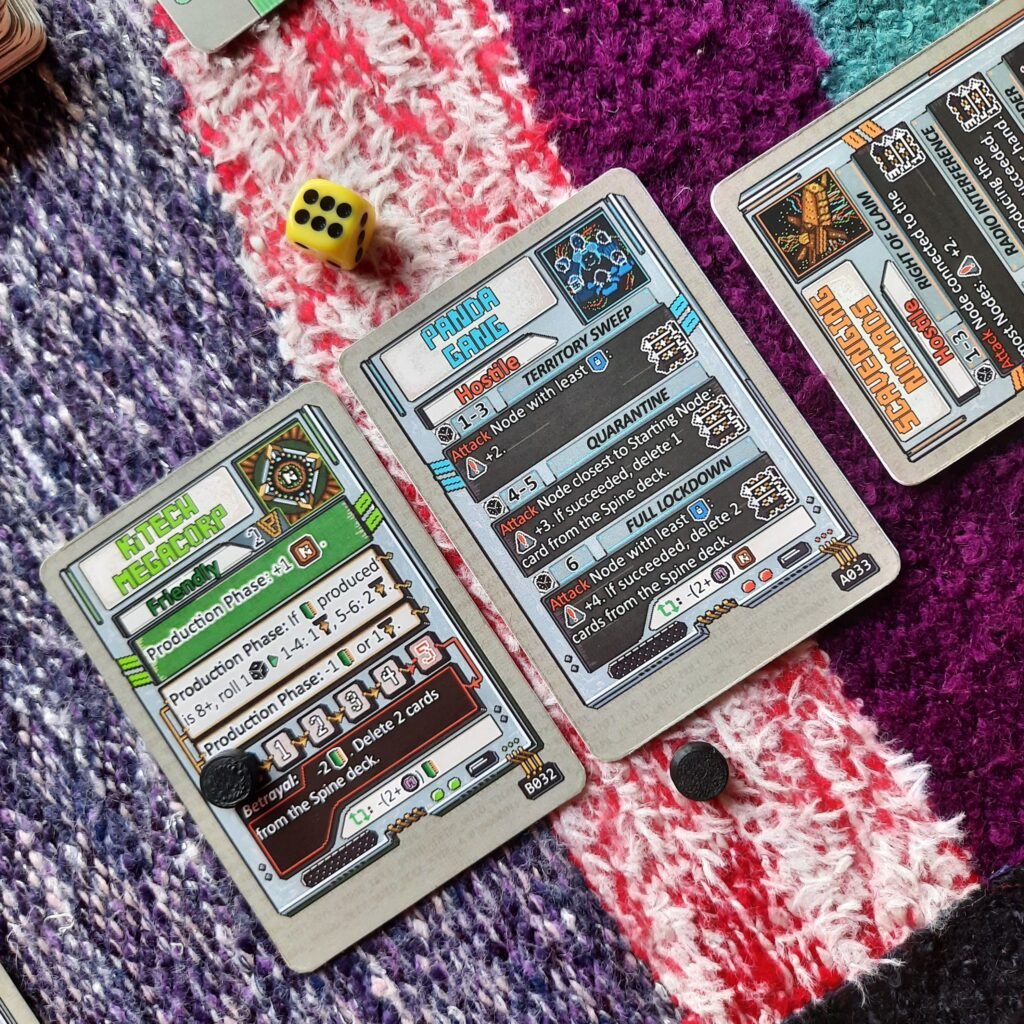
Then come the factions. Two factions begin the game hostile, with the remaining two entering later. Hostile factions act during the Factions phase and can attack your network, while making a deal flips one to its friendly side and gives you access to its benefit.
The catch? Friendly factions build tension, and if that tension reaches its limit, they betray you and turn hostile again. You can also break a deal yourself before things reach that point.
And while all of that is happening, the Kill-Code keeps deleting cards from the Spine deck.
Those cards, along with failed scans, destroyed nodes, and certain faction effects, end up in the Deleted Stack. The bigger that stack becomes, the higher your Danger value climbs, which in turn makes hostile faction attacks stronger. Purging lets you move eligible cards out of that stack and back to the bottom of the Spine deck, giving you one way to push back against the growing threat.
Survive until the end of the sixth cycle and you tally up your final score. But if the Spine deck runs empty when the game needs to delete another card? Game over.
All you need
The first thing you need for this 36-card game is… well, the 36 cards! That’s 9 pages in total. I laser-printed mine on cardstock and rounded the corners with my Kadomaru Pro.
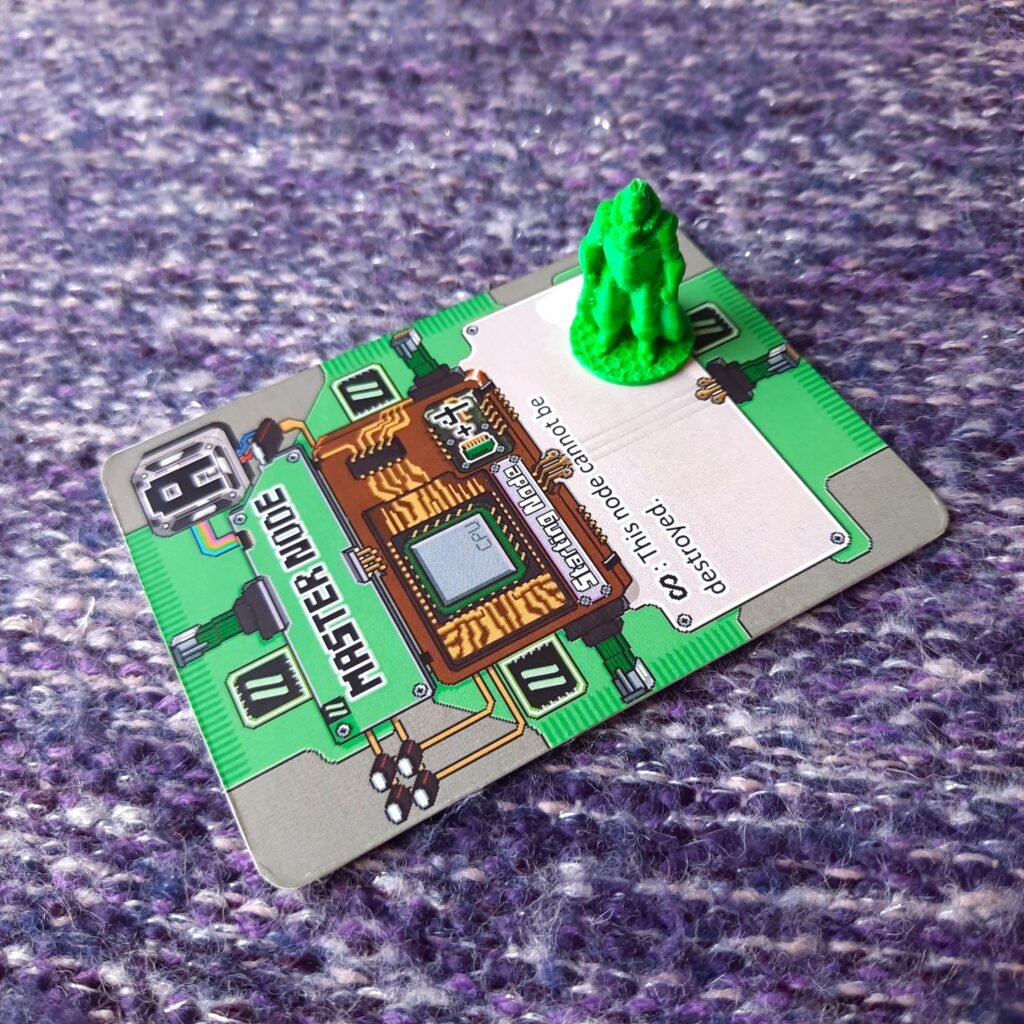
With the prints sorted, grab a D6 die, 8 small tokens, and 1 meeple, or anything convenient to represent you, the netrunner. I had a cyborg-ish creature 3D-printed for one of my other games, which felt fitting for a game set in 2089.
Kill-Code, I’m coming for ya!
Entry: after playing the game
Findings
That game-in-a-game feel
Like the many moving parts of an action-packed movie, Overclock has multiple phases, and most of them almost feel like a game in themselves!
The Actions phase is probably the prime example. It isn’t just one action you perform and move on. You’ve got five main actions to choose from: Scan, Deploy, Purge, Execute a Program, or equip an Upgrade. Then there are the free and reactive actions too, like moving Ghost around the network, making or breaking deals, and playing Sentinels when the right trigger comes up. So even within one phase, I’m already juggling several completely different things.
Then comes the Factions phase, which changes depending on who you’ve made friends with and who still wants a piece of you. Hostile factions can act against your network and launch attacks, while friendly factions give you benefits instead. But those friendships come with tension, and letting that climb too far can end in betrayal. That whole relationship-management side of the game honestly feels like another little game of its own.
And even the Ghost brings another layer. There are two netrunners to choose from, each with their own abilities, conditions, and scoring possibilities. Pair that with managing Ki-Coin, RAM, and ICE, and suddenly there’s a whole resource-management game running alongside everything else.
That’s what gave me the game-in-a-game feeling. And it’s fun!
A 'non-solo' solo!
This one is quite interesting because I genuinely can’t recall the last time a solo game made me feel this way…
So get this: Overclock is 100% solo, but while playing it, you don’t really feel like you’re alone at the table. And Soliman deserves full credit for engineering that feeling.
A LOT of that comes from the factions. Whether they’re helping you (friendly), attacking you (hostile), or suddenly turning against you (friendly, but about to turn), they constantly feel like another presence at the table.
Then there’s the Kill-Code doing its own thing in the background, constantly eating away at the Spine. Those deleted cards push up your Danger, which makes hostile factions hit harder. And the further you get into the game, the more the pressure ramps up. The Deleted Stack keeps growing if you can’t keep it under control, while new factions enter the game in cycles 3 and 5 as hostile factions.
So while I’m making my own plans, it constantly feels like something else is making moves against me too. The whole thing gives off this multiplayer vibe, despite there being nobody else at the table.
This is exactly what Soliman wanted to achieve with Overclock. He talked about wanting the factions to feel like they had their own agenda, and trying to recreate that unpredictability and negotiation you normally get from other players in a 4X game.
A small ‘BIG’ Game
If I told you about a game with a Production phase where your network generates resources, an Actions phase with five main actions plus free and reactive ones, a Factions phase where alliances and attacks play out, followed by the Kill-Code and Cleanup phases… most of you would probably assume I’m talking about a pretty big game.
Well… it is. Just not physically.
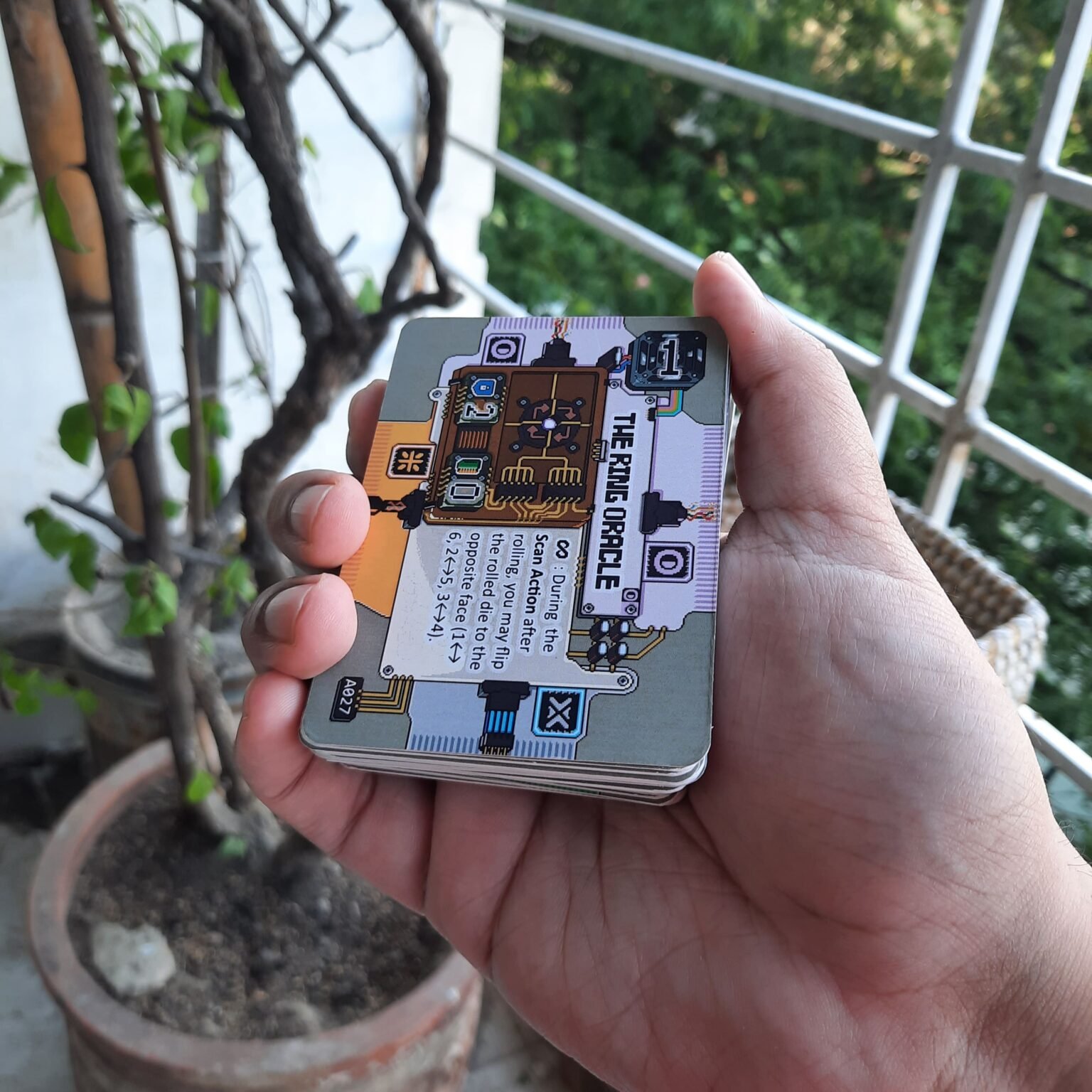
It’s crazy that Overclock makes all of this happen with only 36 cards, a D6, and a handful of tokens. You’re managing an economy, expanding a network, dealing with factions, upgrading your netrunner, watching the Kill-Code eat away at the Spine, and trying to keep everything from spiraling out of control. And yet, the whole thing can fit inside a small card box.
That’s why I’d call Overclock a small ‘BIG’ game.
You don’t need a massive table or a box stuffed with components to pull off this 4X experience. Give me a small flat surface, pull those cards out, and suddenly there’s this whole expansive cyberpunk world sitting in front of me!
Puzzly Deployment
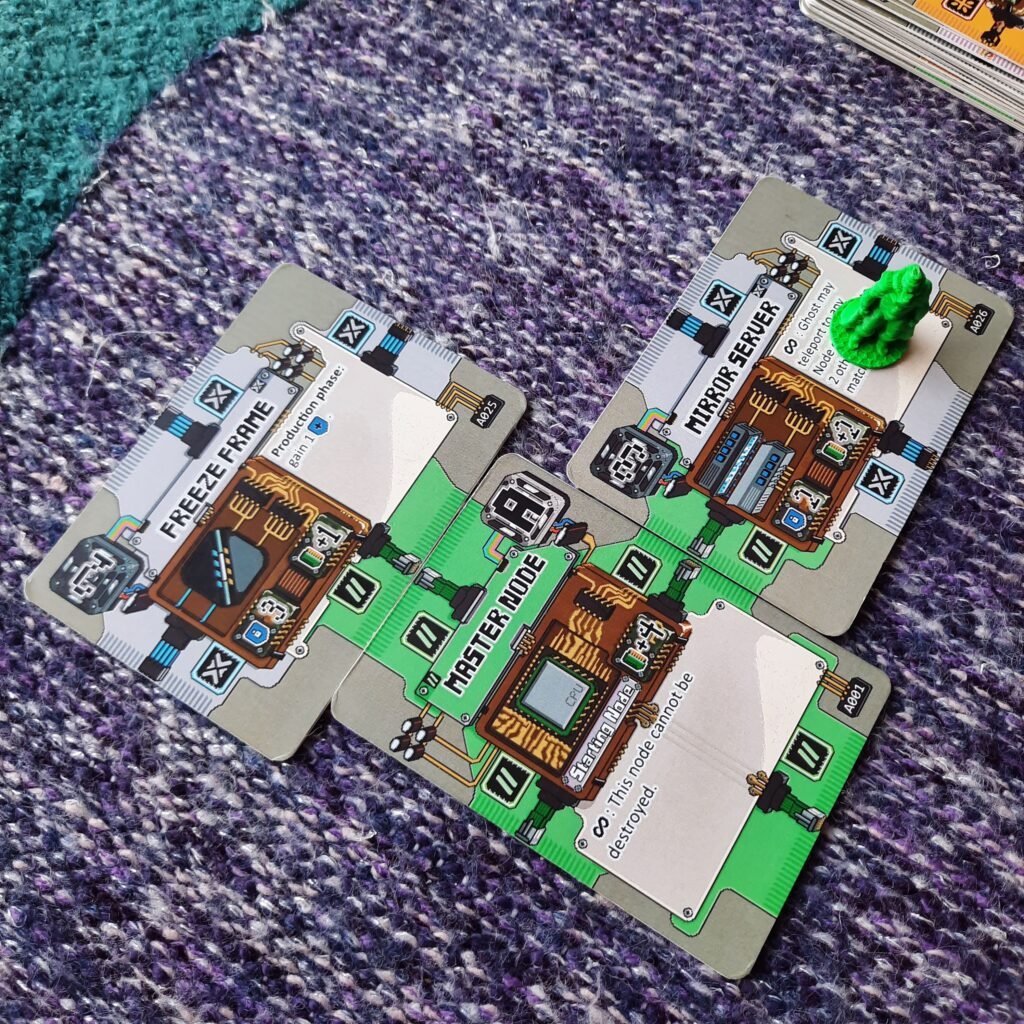
The whole idea of rebuilding the neural network by physically deploying nodes is not only super relevant to the theme, but also turns into this wonderfully puzzly little game, and I LOVED that.
You can’t just slap a new node down wherever you want. Nodes have to alternate between vertical and horizontal orientations, and where you place one matters because of the interfaces running along their edges. Match those interfaces and you can earn Ki-Coin when deploying, make it cheaper for Ghost to move through the network, and even create longer routes for Purging later on. There are also Bypass interfaces, where moving through a connection containing at least one of them costs you nothing at all.
So every time I was about to deploy a node, I found myself staring at my network for a bit. Where does this one fit best? How many interfaces can I match? Will putting it here make things easier for me later?
Watching that network slowly spread across the table really sells the whole rebuilding-the-Spine thing too.
Deployment is just ONE of the things you can do during the Actions phase. I swear, this phase could almost be a standalone game of its own! Haha.
Deliberate Stress Provocation
Say hello to one of my recent favorite game concepts: Deliberate Stress Provocation. Kudos to Bravery for introducing me to this particular brand of suffering!
And Overclock absolutely knows how to tighten the screws.
As the cycles move forward, the Kill-Code keeps chewing through the Spine, the Deleted Stack can keep growing, and with it, your Danger. Higher Danger makes hostile factions hit harder, while new factions enter the game in cycles 3 and 5 already hostile.
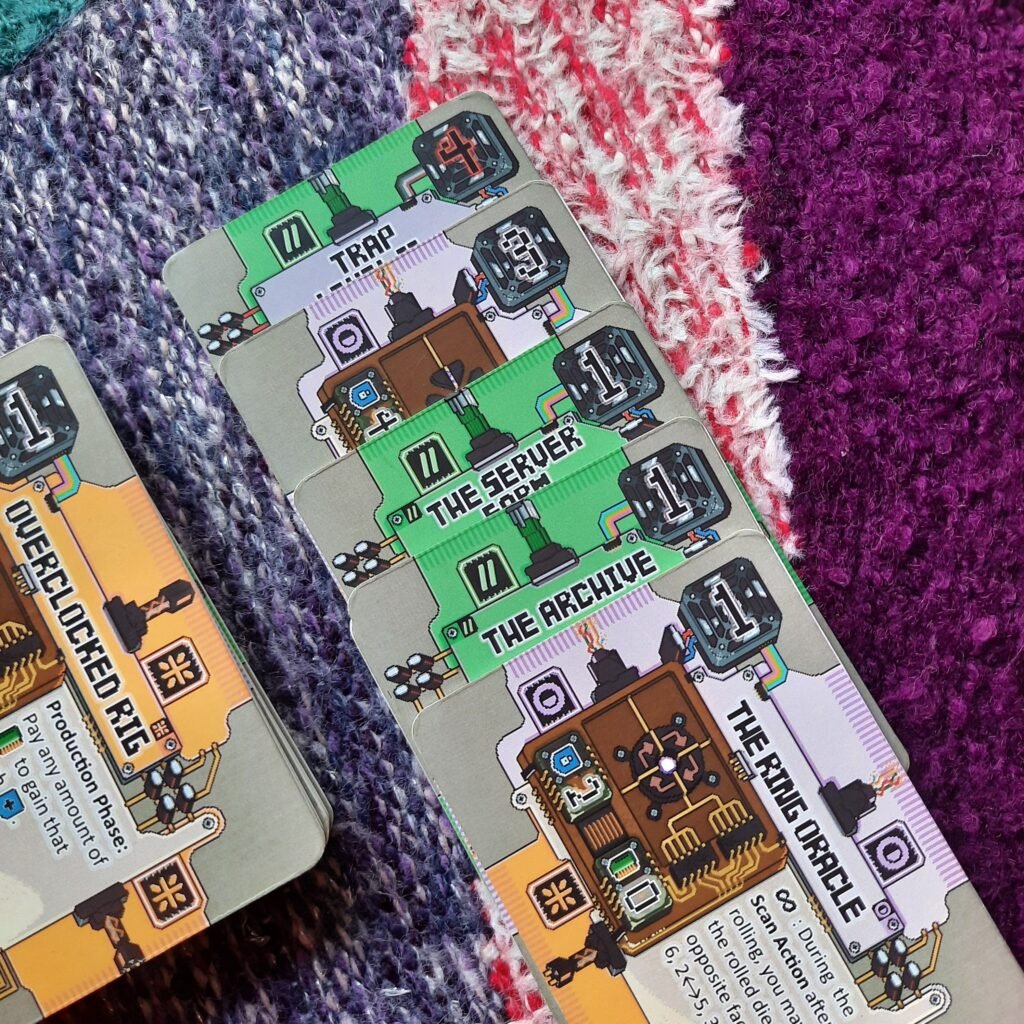
And then there are the Trap cards. Once one lands in the Deleted Stack, it stays there for good. You can’t Purge it out, so some of that growing Danger is literally there to stay.
So no matter how nicely you think you’ve got things under control, the game keeps finding ways to make the walls close in around you. And as masochistic as that may sound… that suffocating feeling is AWESOME.
Adding to that, there’s something else I really liked about how Overclock creates that pressure: the Kill-Code itself.
Much like my favorite villain, Sauron (Lord of the Rings), you don’t really confront the Kill-Code face-to-face. In fact, you can’t directly interact with it at all. You just keep witnessing its malice. Cards disappear. The Spine gets eaten away. Danger climbs. The factions become more dangerous.
It’s this invisible force wreaking havoc in the background while you’re desperately trying to save the day. And I liked that VERY much.
The artwork!
This one deserves a shoutout.
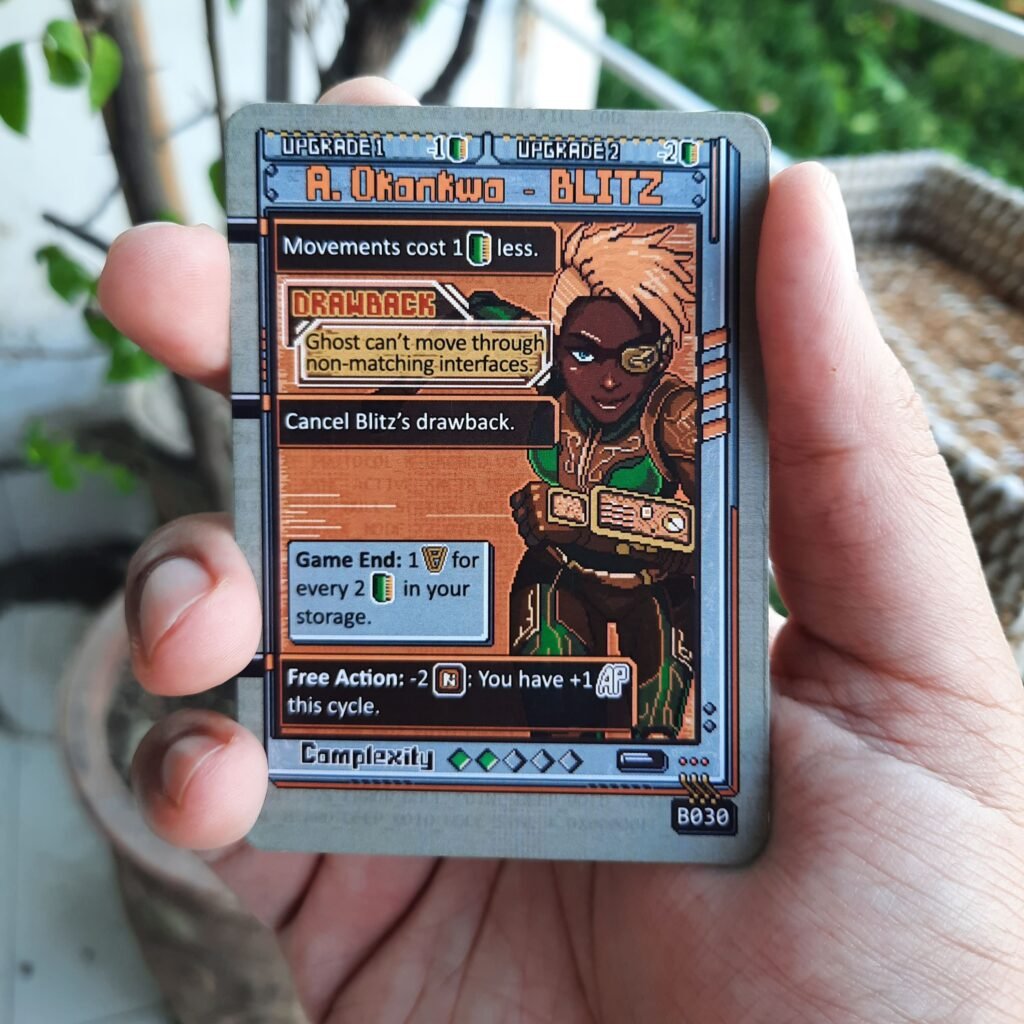
The whole game has this retro-tech aesthetic going on. Pixel-y text, computer screens, exposed circuitry, wires, ports sticking out from the sides of cards… everything feels like it belongs inside this massive digital network you’re trying to rebuild.
What I especially liked is how the cards don’t just look like cards. Once you start laying those nodes out and connecting them together, they start looking like actual pieces of some giant network spreading across the table. Even the way Upgrades get tucked into your netrunner card makes them feel like modules being slotted in and activated.
Also, the two netrunners look SICK!
The overall color palette stands out too. Soliman has aced the visual side of Overclock!
Can you save the day?
Six cycles to save the neural network.
More cards are being deleted from the Spine. Danger keeps climbing. New factions are entering the fray, while the ones you thought were on your side might just turn against you.
And through all of it, you’re racing to deploy more nodes and rebuild the network faster than the Kill-Code can tear it apart. Can you outrun the Kill-Code?
Overclock is already live and blazing all guns on Gamefound, so check it out if it sounds like your type. There’s a print-and-play pledge up for grabs too. 😉
Recommended items
Game Overview
Publisher: MoD Games
Designer: Mohammad Soliman
Artist: Mohammad Soliman
Number of players: 1
Difficulty level: Medium
Rounds of gameplay needed to learn: 1 round
Game duration: 45 minutes
Available on: Gamefound
Theme: Cyberpunk 4X card game | Rebuilding a neural network
Number of pages and color: 9 pages (color)
Assembling difficulty level: Pretty easy. Crafting 36 double-sided cards.
Lamination: Not recommended
Additional elements required: 1 D6 die, 8 tokens, and one meeple.
Travel-friendly: 10/10
Shelving friendly: 10/10
Rating from PnP Time: 9/10
Tas is a game designer and blogger based in Bangladesh, with the dream of exploring the world of games and introducing it to anyone new to it.