Dragon vs Kingdom 2
The trouble with supposed dragon sightings is that kingdoms are very good at treating them like tomorrow’s problem.
A village does not stop growing because someone “saw” a winged beast over the hills.
Towers still need to rise. Shops need their place. Walls need to be raised and fortified. Somewhere, someone is probably rolling a catapult into position in the name of preparation.
The reports keep getting stranger, though…
One kingdom swears it saw a single mighty dragon cutting across the sky. Another says it was not one dragon at all, but a swarm of hatchlings. And then there are the whispers about a hatchling AND a mother dragon.
Still, the work continues. Settlements spread. Fortresses take shape. Barracks sharpen the kingdom’s defenses.
But is it enough? Will any of it withstand dragon fire?
No time to ponder. The smoke is inching closer…
After all, the rumors were true!
Entry: before playing the game
First impression
I first played Dragon vs Kingdom back in October 2024, and the part that hooked me was the dual-role nature of it.
A part of my brain was busy being the builder, placing structures, making the most of where towers, houses, and shops went, and trying to grow a kingdom that could actually score well.
The other part? Very much committed to wreaking havoc with fire as a mighty dragon!
It was also one of my earliest non-solo PnP experiences, which made it feel even more special. Until then, most of the PnPs I played leaned toward solo games.
The first edition was published by No Box Games, while this second edition comes under Shiny Pigeon Printables, and I’m no stranger to their games, having played a handful of them. So far, I’ve really liked what Chris Backe and Parker Simpson have created together, and I also appreciate their philosophy of creating zero-assembly games. So you focus more on playing the game and less on prepping it.
So when I saw Dragon vs Kingdom coming back, it piqued my interest. What’s new this time?
Dragon vs Kingdom was already a pretty solid game as it was.
So with this second edition, I was less curious about whether the game still worked, and more curious about what had been added to a system that already had a strong identity.
A bit on the game
Dragon vs Kingdom is a 2 to 5 player pass-and-play game where every player switches between two roles: Builder and Dragon.
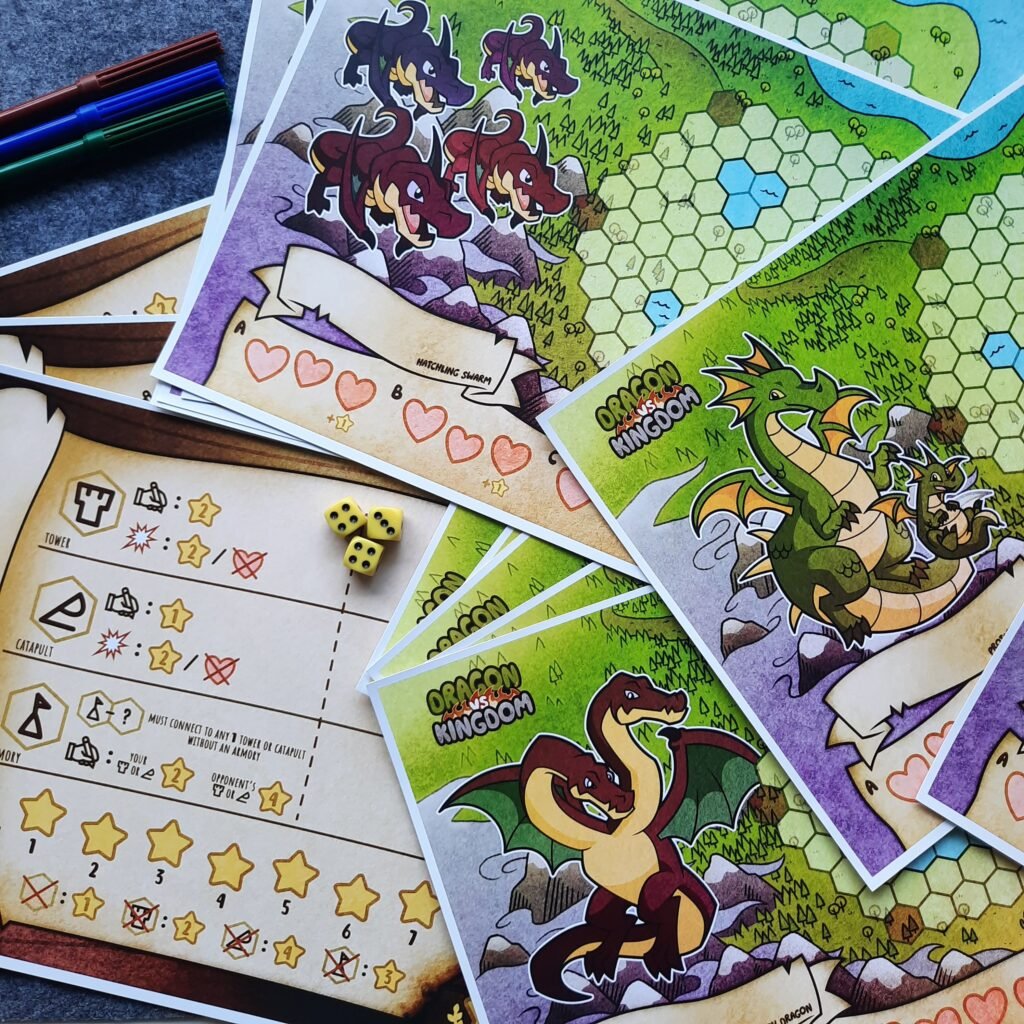
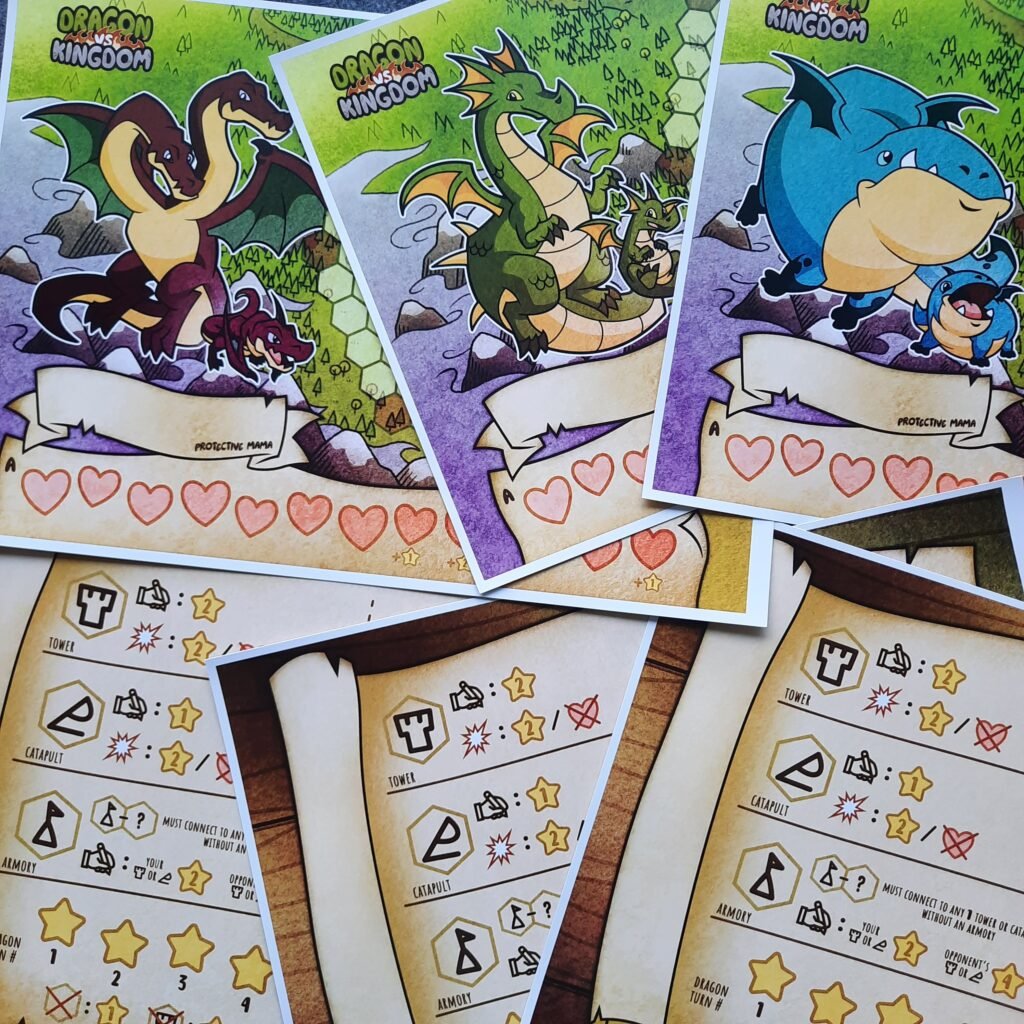
At the start of the game, the table chooses one Dragon type and one Kingdom type to play with. The Dragon options are Mighty Dragon, Hatchling Swarm, and Protective Mama. The Kingdom options are The Village, The Fortress, and The Barracks.
Everyone plays with the same Dragon-Kingdom setup for that game. Each player gets a map sheet of their own, names their dragon or dragons, and uses a different colored marker.
Each player gets a scoring sheet as well. The scoring sheet stays with you, but the map sheets keep moving around the table. Hence, pass-and-play.
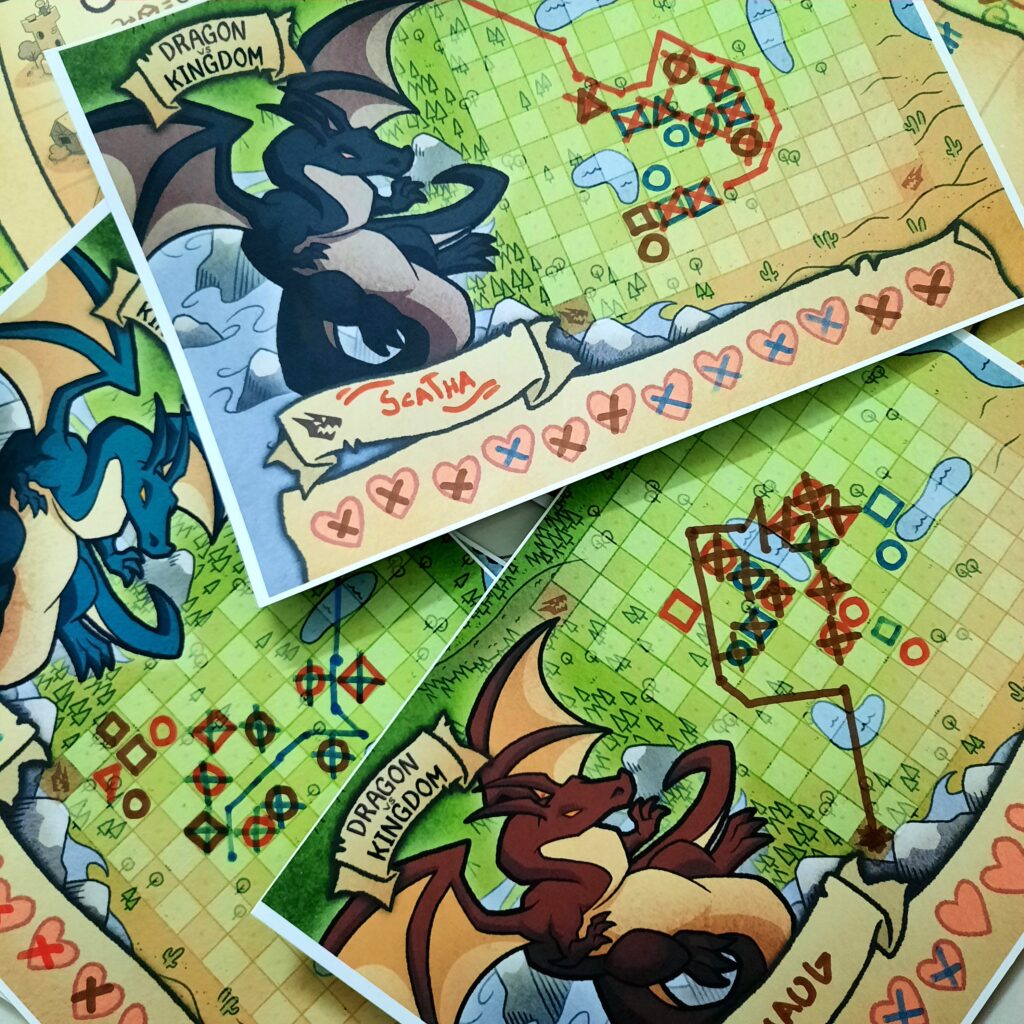
When another player’s map sheet is in front of you, you play as the Builder. This is where you place structures, score points, and attack the opponent’s dragon if need be. The exact structures depend on the Kingdom type you picked. With The Village, you are working with towers, houses, and shops. With The Fortress, walls and keeps come into play. With The Barracks, the kingdom gets more aggressive with catapults and armories.
On a Builder turn, you usually get 2 energy to spend on building or attacking. In a 2-player game, you get 3 energy instead. If you want to attack and build on the same turn, the attack has to happen first.
Once everyone is done, the map sheets are passed along again. So instead of waiting around for your turn, you are constantly getting a new kingdom in front of you, making decisions, scoring points, and watching the map slowly fill up with everyone’s structures.
Eventually, the map with your dragon’s name comes back to you. That is when you stop being the Builder and play as the Dragon.
As the Dragon, you move around the map and destroy spaces. Depending on the Dragon type, this can mean controlling one mighty dragon, managing a swarm of hatchlings, or playing with both a mother dragon and a hatchling. You can fly, dive, and use the dragon’s destructive actions to remove structures and score points from the damage you cause.
Destroyed spaces also stay destroyed, which means the map becomes tighter as the game goes on. Places that looked useful earlier may no longer be available later.
The game ends either when the dragon defeat condition is triggered or after the 7th Dragon turn. Then everyone adds up their points, and the highest scorer wins.
All you need
Like I said, zero-assembly games are very much Shiny Pigeon Printables’ signature, and Dragon vs Kingdom’s second edition is no different.
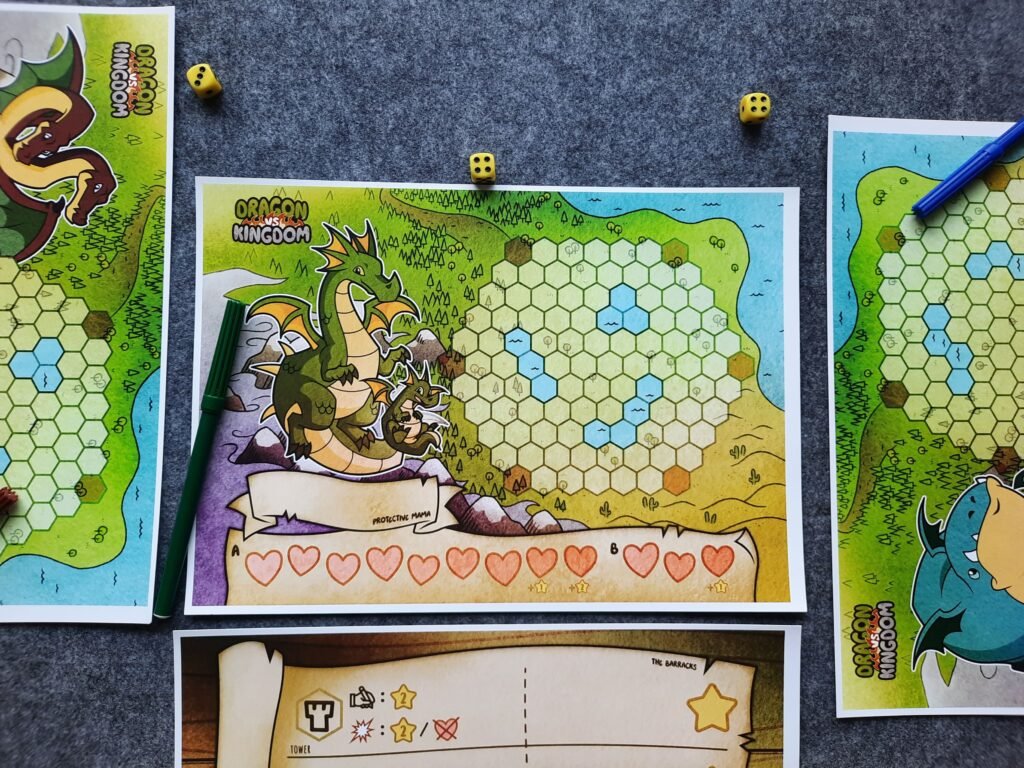
Once the table chooses a Dragon type and a Kingdom type, print one Dragon map sheet and one Kingdom scoring sheet per player.
So, if three of you are playing with Mighty Dragon and The Village, you will need three Mighty Dragon map sheets and three Village scoring sheets.
With the sheets sorted, grab one marker or pen per player, preferably in different colors. Even better if the marker color matches the dragon on your map sheet.
For dice, one D6 per player is ideal. But if you only have one D6, that works too. Just keep it in the middle and share it around.
Since you’ll be drawing and scoring on the sheets throughout the game, lamination is highly recommended. Pair the laminated sheets with dry-erase markers, and the kingdoms can keep returning to the table long after the dragons are done with them.
Entry: after playing the game
Findings
The trio that brings this game to life
This part is mostly the same as the first edition, but I cannot help but talk about it again. Because this trio is the core of Dragon vs Kingdom. It holds the whole thing together!
Duality
As you know by now, you are not playing Dragon vs Kingdom from one fixed perspective.
You are playing as both the Builder and the Dragon, and the ratio depends on the number of players in the game. With more players, you spend more time building, scoring, and dealing with the kingdom side of things before the map with your dragon’s name finally comes back to you.
As the Builder, your mind is on the grid. You are placing structures, figuring out where towers, houses, shops, walls, keeps, catapults, or armories can work best depending on the Kingdom type, and looking for ways to bag more points from the spaces available to you. You are also paying attention to what other players have already placed, because their structures can become part of your scoring opportunities as well. And if needed, you are attacking the opponent’s dragon too.
But once you shift into the Dragon role, the whole tempo shifts.
Now you are no longer trying to grow anything. You are planning routes, looking for valuable structures to destroy, deciding how much damage you can cause, and trying to end your turn in a position where the Builders cannot punish you too easily.
This flip to and from Dragon to Builder, from a destroyer of worlds to the protector of the realms, is the heart of the game.
Opponent Parasitism
I recently raved about this game design scope in my blog on Shinobi Spy & Supply, where you can gain advantages or points off your opponent’s setup. While I could not quite remember where I had first run into it, playing Dragon vs Kingdom again refreshed my memory.
THIS is the game where I first got a taste of it.
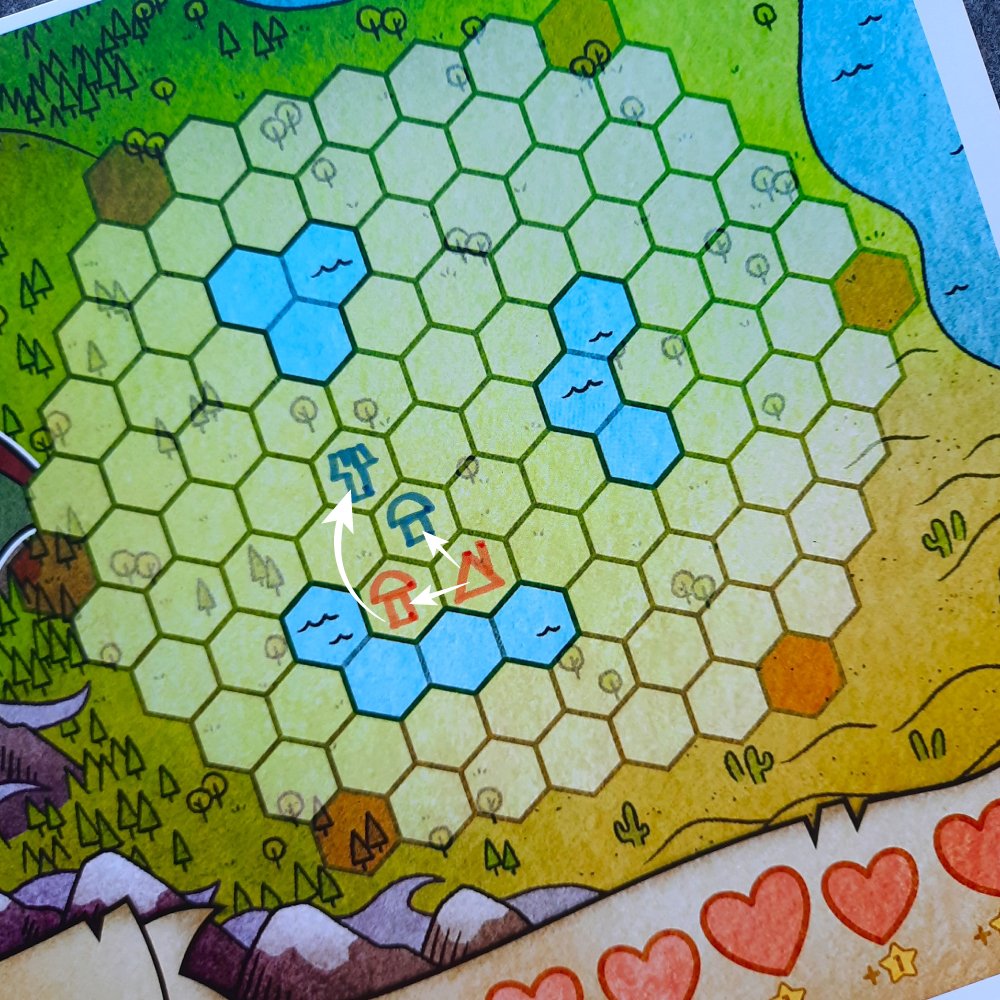
When you are building settlements, there are advantages to placing your structures near what other players have already drawn. Take The Village, for example. Houses score based on intact towers within 3 spaces, and those towers do not have to be yours. So if another player has already placed a tower in a useful spot, you can build around it and score from that placement.
The same thing happens with shops. Shops score based on nearby houses, and again, those houses can belong to anyone. So instead of looking at the map as my structures and their structures, you start looking at it as one shared opportunity board where everyone is quietly trying to benefit from everyone else’s work.
That makes the Builder phase pretty interesting. Since this is a game where the player with the most points wins, placing your structures in the right spot and making the most out of your opponents’ structures can absolutely decide who stays ahead.
On the flip side, placing structures near each other may help you bag points, but it also makes it easier for dragons to burn through them in one go. The dilemma!
Extra points to Chris and Parker for creating the crunchy paradox that comes from structure placement.
Pass-and-play
Yet another standout of Dragon vs Kingdom is the pass-and-play structure.
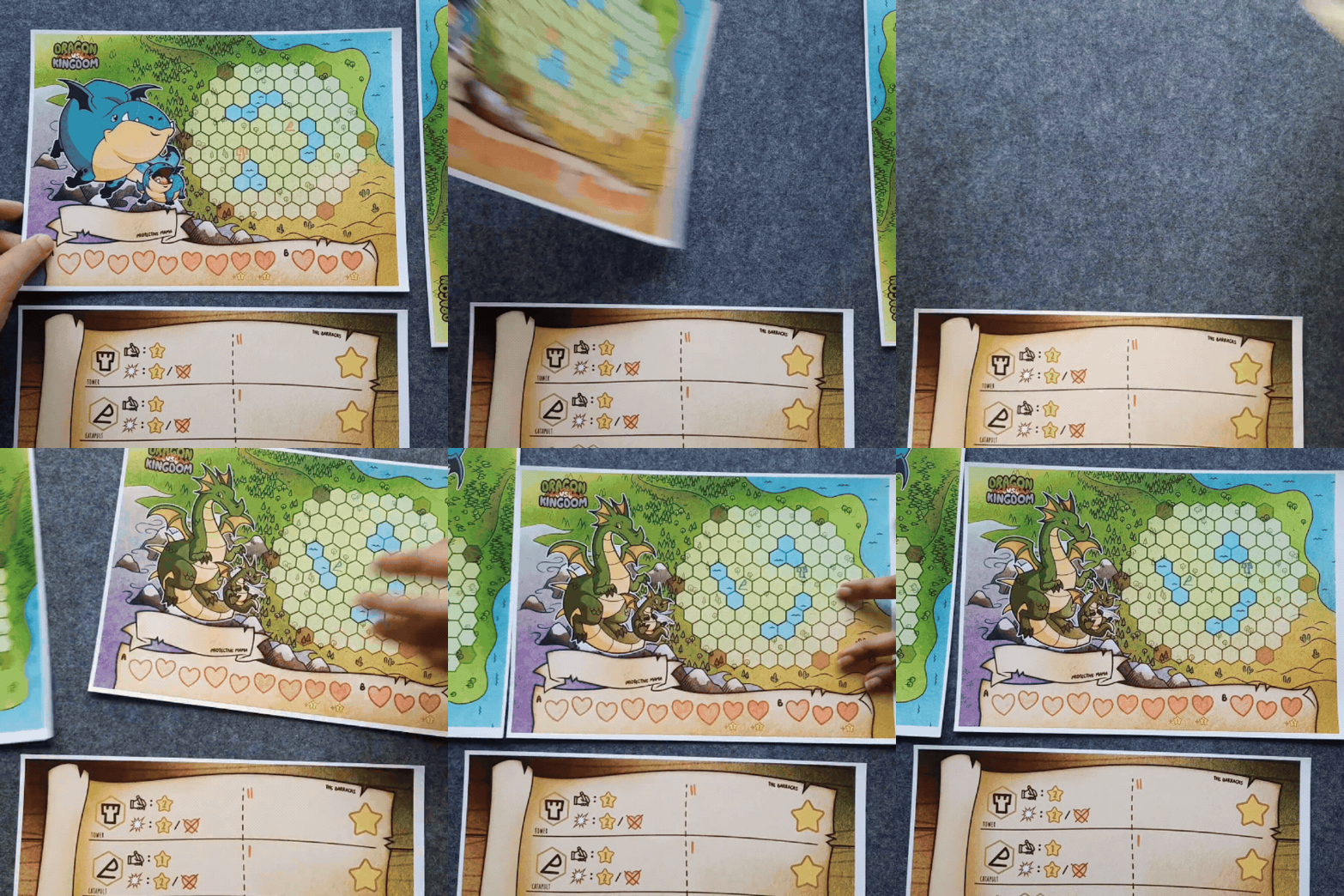
Once everyone is done with their actions, the map sheet in front of you moves to the player on your left, and you receive a new one from the player on your right. Your scoring sheet stays with you, but the kingdom you are working on keeps changing.
That does a lot for the game. There is no long wait for your next turn, because everyone is playing at the same time. You are always looking at a map, figuring out where to build, whether to attack, how to use the structures already there, and what kind of mess the dragon has left behind.
Each round feels like a small episode of a TV series. You work on the sheet in front of you, but you are also looking around, noticing what others are drawing, where the dragons are moving, and how each map is slowly developing its own problems.
Every time I played Dragon vs Kingdom with friends, we ended up talking about what we were planning and how we were approaching the game. That might sound counterproductive for a competitive game, but for this one, it really made the experience better.
What’s new: the hex grid!
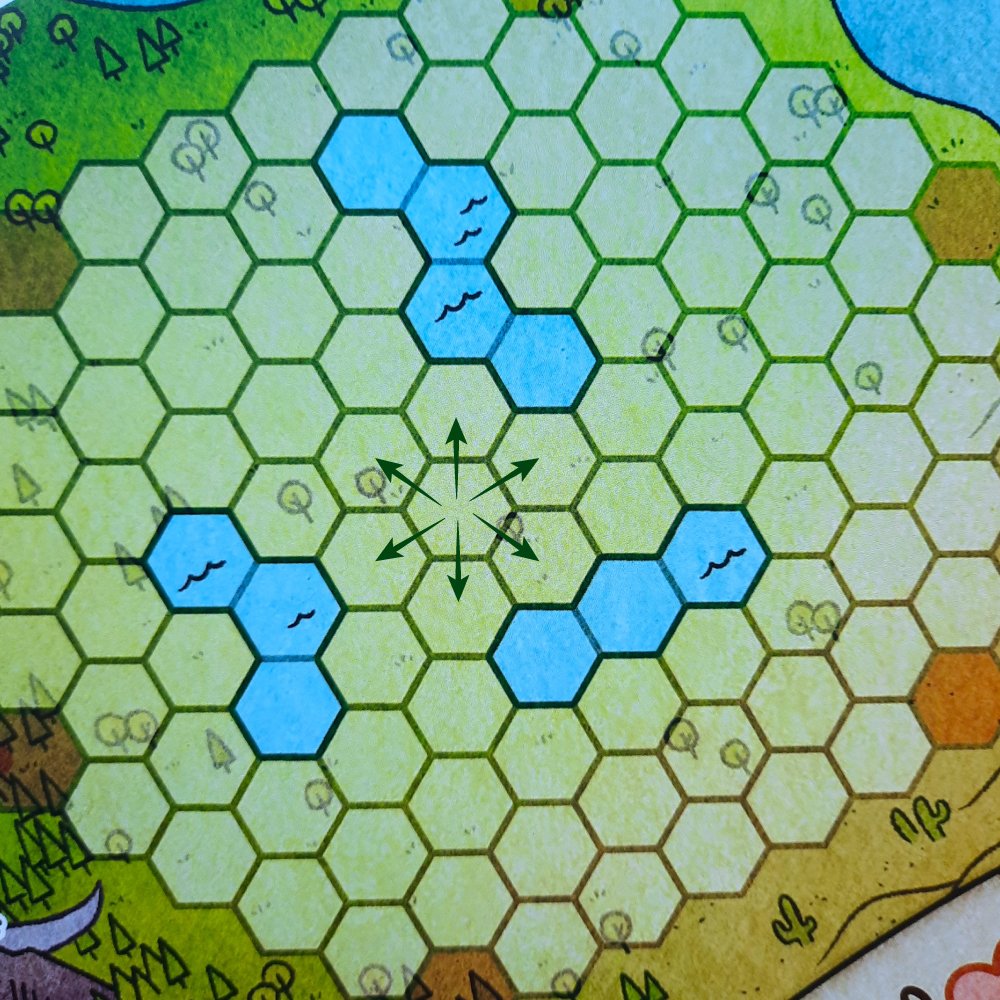
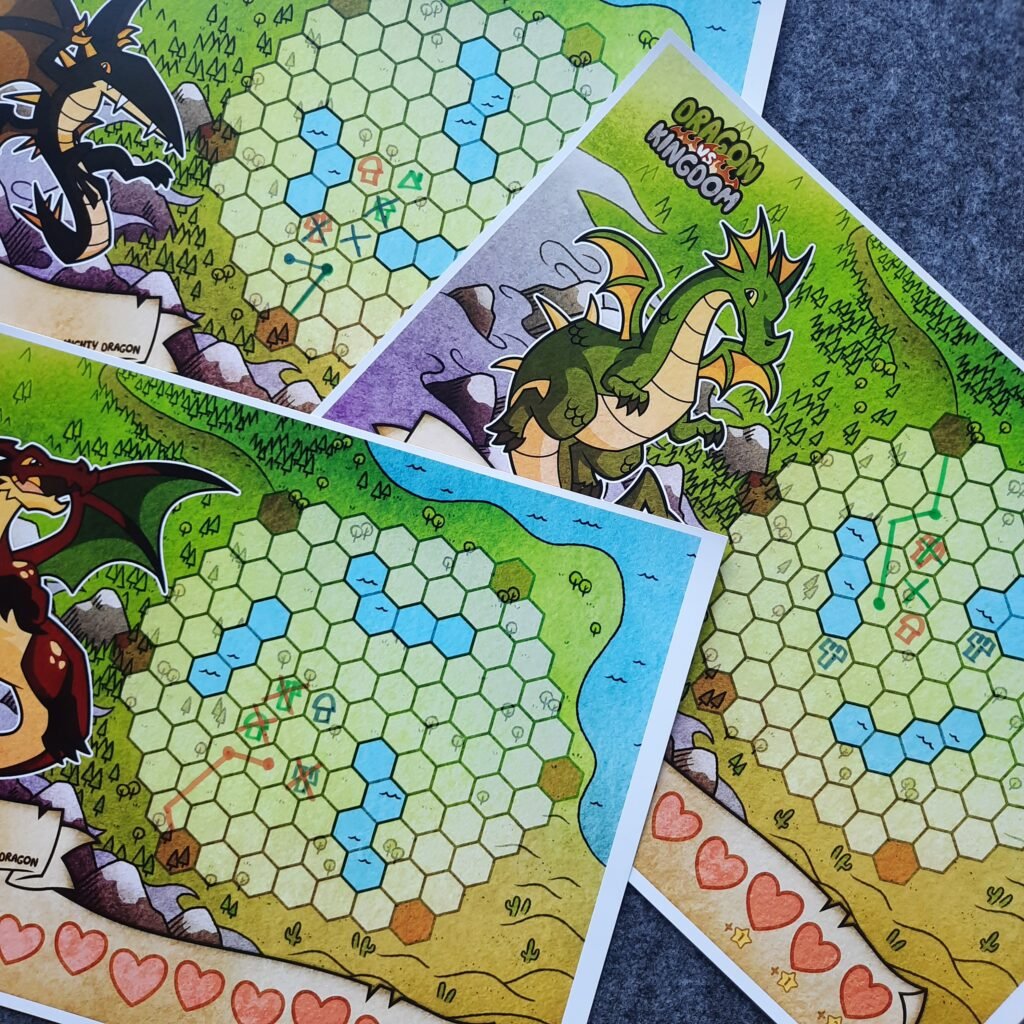
This has to be one of the most noticeable changes in the second edition. Chris and Parker moved the game from a square grid to a hexagonal grid, and that feels like a good move for Dragon vs Kingdom.
A big part of the game is calculated placement. You are constantly looking at where structures should go, how far they are from one another, what they can score from, and whether they are safe enough from the dragon. So moving to a hex grid, where you now have six directions to think about, naturally opens up the map more.
And it is not just for the Builder side of things.
The Dragon side benefits from it too. With the way dragons can move, dive, burn, and scorch across the map, the hex grid gives you more possible routes and angles to consider.
So this is not just a visual change. The hex grid makes the map feel more open and tactical with each round.
What’s new: more dragons!
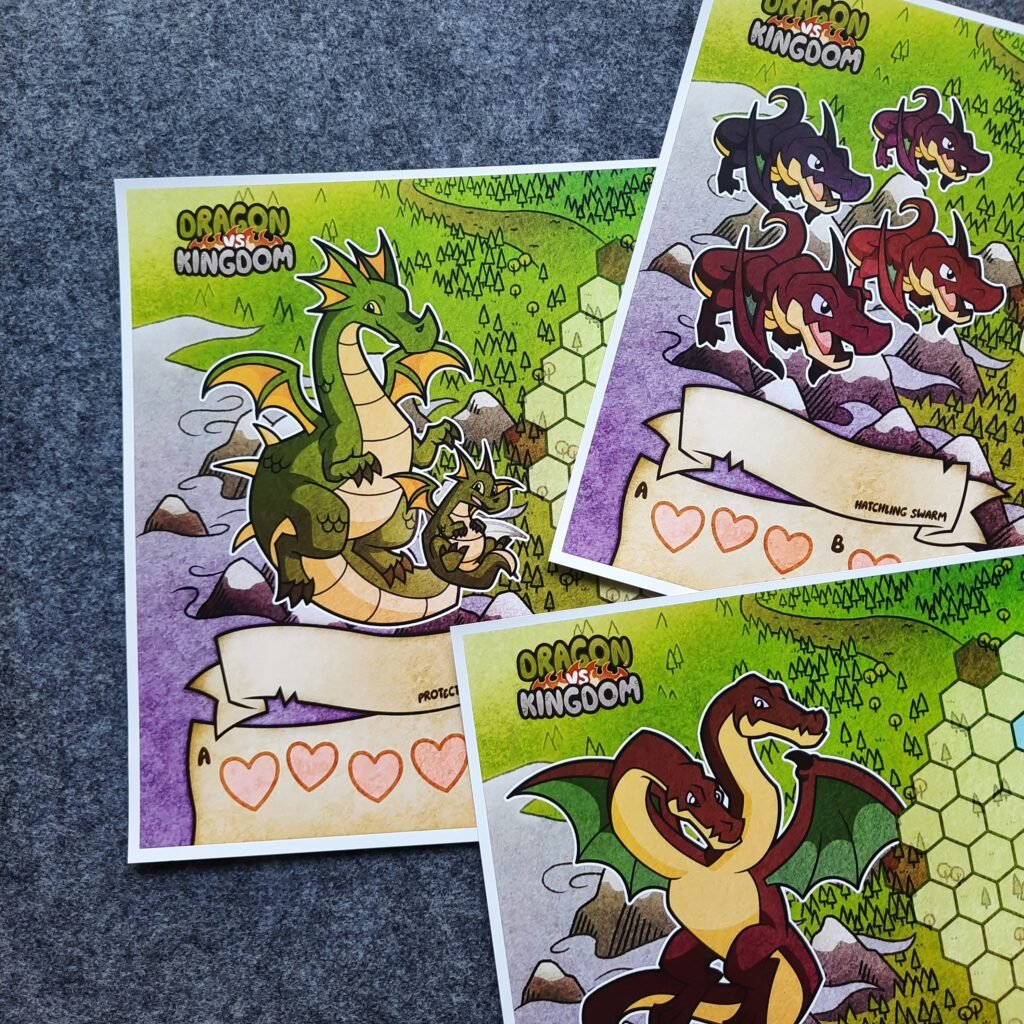
The OG dragon from the first edition is still here, now called Mighty Dragon. This is the Dragon vs Kingdom I already knew. But the second edition does not stop there.
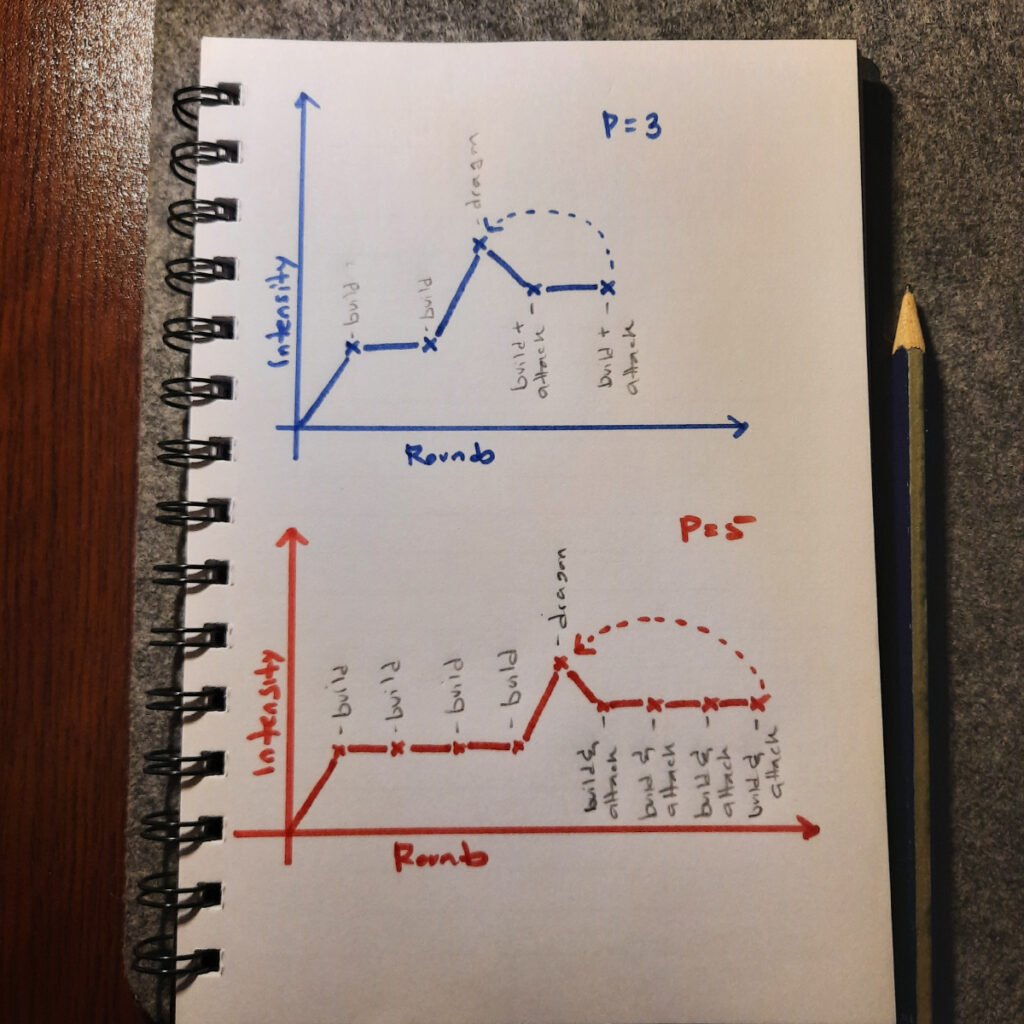
Now there’s Hatchling Swarm, where instead of controlling one big dragon, you have four hatchlings to work with. On your Dragon turn, you get to activate two of them, each with 2 energy. So the Dragon phase becomes less about one large threat and more about several smaller threats spreading around the kingdom.
Health-wise, they are not like the Mighty Dragon either. But since there are four of them, kingdoms are bound to have a hard time tackling these fiery little nuggets once they start spreading across the map.
Then there’s Protective Mama, where you control one mother dragon and one hatchling. The mother dragon gets the stronger, destructive action with Scorch, while the hatchling still gets to move around and dive. So you are managing two dragons on the map, each doing their part in setting the kingdoms on fire.
This adds a ton of personality to the game. The Dragon phase was already the peak of the game as it was, and now with three different Dragon types to choose from, things just got a lot more feisty.
What’s new: more kingdoms!
As if bringing three different Dragon types was not enough, Chris and Parker also introduced three different Kingdom scoring sheets, each with its own set of structures.
All three Kingdom types have towers in common, but the rest change quite a bit.
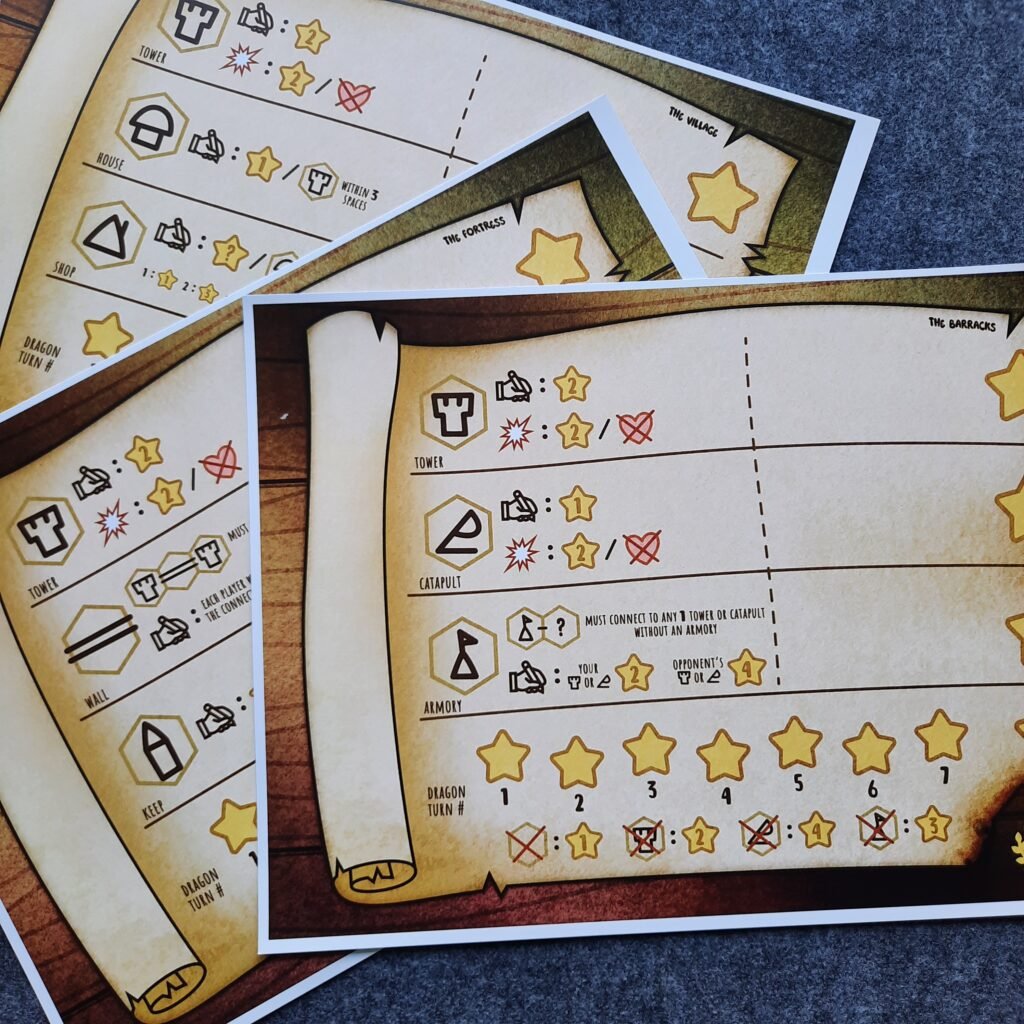
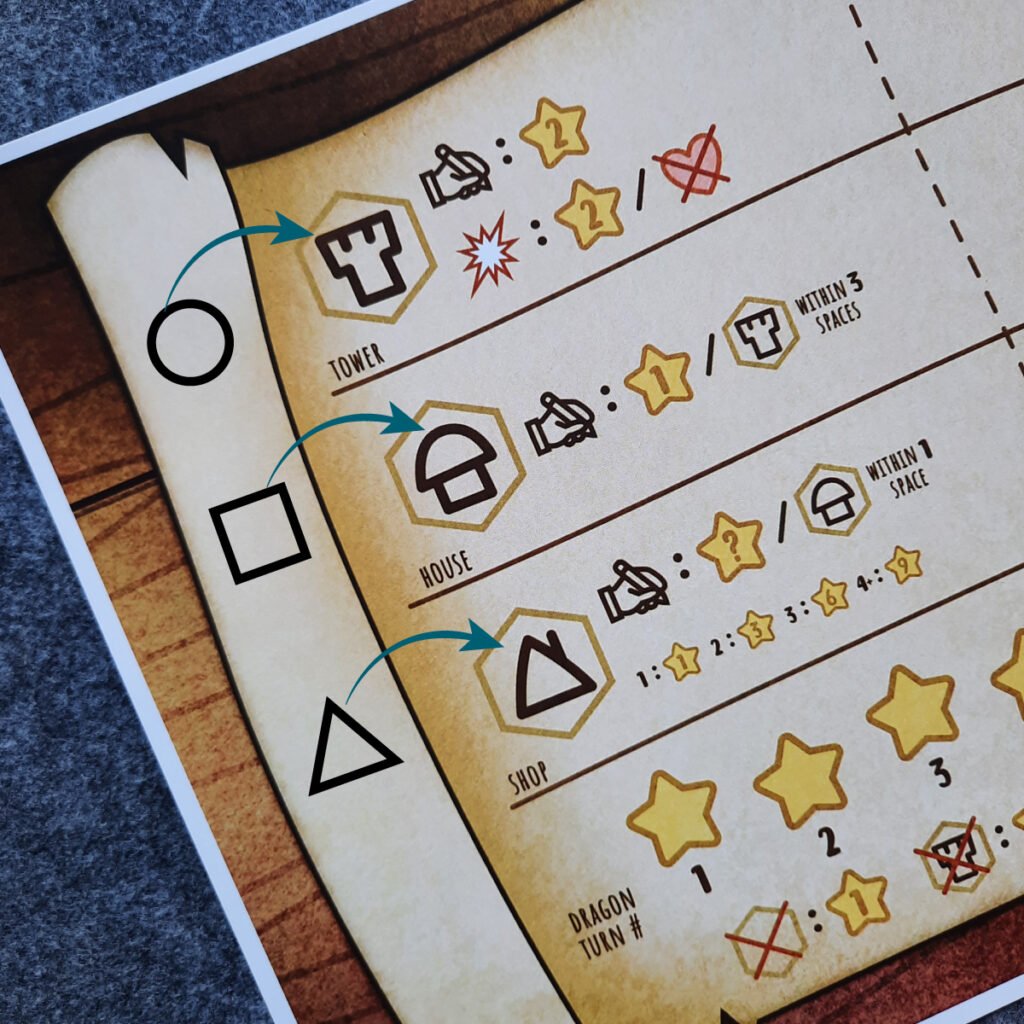
With The Village, you get the closest version to the Dragon vs Kingdom I already knew, with towers, houses, and shops. Houses score from nearby towers, while shops score from nearby houses.
With The Fortress, the kingdom starts feeling sturdier. towers are still there, but now you are also working with walls and keeps. Walls connect towers, and keeps score based on the walls visible from them. So the focus shifts toward structure placement across lines and directions.
Then there is The Barracks, where the kingdom gets more aggressive. Alongside towers, you now get catapults and armories. Catapults give you another way to attack dragons, while armories can improve attacks with rerolls.
So each Kingdom type brings a different angle to the Builder phase. The Village feels quaint mixed with caution, The Fortress leans into connections and defensive planning, and The Barracks gives you more tools to go on the offense and hurt the dragons before they burn through too much of the map.
Another thing I appreciated was the use of symbols for structures instead of geometric shapes. I remember seeing Parker post in the communities before the release, asking about the symbol vs shape direction. So seeing the symbols make it into the final version felt nice, especially knowing the community had a say in that direction.
So with three Dragon types and three Kingdom scoring sheets, you get nine possible combinations:
Mighty Dragon X The Village
Mighty Dragon X The Fortress
Mighty Dragon X The Barracks
Hatchling Swarm X The Village
Hatchling Swarm X The Fortress
Hatchling Swarm X The Barracks
Protective Mama X The Village
Protective Mama X The Fortress
Protective Mama X The Barracks
As if the first edition was not replayable enough!
Between the hex grid and these Dragon-Kingdom combinations, the second edition feels like a proper leap from the first edition.
Preferred number of players?
Dragon vs Kingdom is a 2 to 5 player game, and so far, I have played it in 3, 4, and 5-player setups.
For me, it clicked best with 3 players. It finds the right balance.
In a 3-player game, I get a couple of turns to do my thing as the Builder before my Dragon phase arrives. Not so much that I get complacent, and not so little that I cannot do much. Just right.
Then comes the third turn, where I finally step in as the Dragon and start wreaking havoc, while also silently praying that the structures I placed on the other maps somehow survive the dragon attacks.
Like I mentioned earlier, I also enjoyed the part where all of us talked through our strategies while playing. We discussed what we were trying to do, how we were reading the maps, and why certain placements made sense. With 3 players, that table talk felt just right. Enough people to make the map movement interesting, but not so many that the discussion slowed the game down too much.
With 5 players, adding that same level of discussion can make a round stretch a bit longer. So for me, 3 players is where the game sits best, at least for a start. Maybe 4 at max, once everyone gets the hang of it.
In the coming days, I’ll be sharing my gameplay experience in one of my upcoming newsletter issues through a Visual Playthrough.
It’s a special format where I show how a game unfolds round by round. So if you want to see how my kingdom held up once the dragons started flying, make sure to subscribe!
Dracarys!
Name your dragon. Build your kingdom in a way that bags points while also making it harder for your opponents’ dragons to burn through it.
And then be a badass dragon and set the world on fire!
Dragon vs Kingdom is now live on Kickstarter, with under 10 days left to back this gem.
Recommended items
Game Overview
Publisher: Shiny Pigeon Printables
Designer: Chris Backe and Parker Simpson
Artist: Parker Simpson
Number of players: 2 to 5
Difficulty level: Medium
Rounds of gameplay needed to learn: 1 to 2 rounds
Game duration: 20 to 30 minutes
Available on: Kickstarter
Theme: Pass-and-Play | Building & Destroying Kingdoms
Number of pages and color: 4 to 10 (color print)
Assembling difficulty level: Super easy, no assembly required.
Lamination: Highly recommended
Additional elements required: Distinct color pens/markers and at least 1 D6 dice.
Time to learn: Within 30 minutes
Travel-friendly: 9/10
Shelving friendly: 10/10
Rating from PnP Time: 9.5/10

Tas is a game designer and blogger based in Bangladesh, with the dream of exploring the world of games and introducing it to anyone new to it.