Someone's Y
You look around the table.
Poker faces. Confused faces. Someone in there is also looking a bit too confident.
Everyone has a face-down card in front of them. A pile of tokens sits at the center.
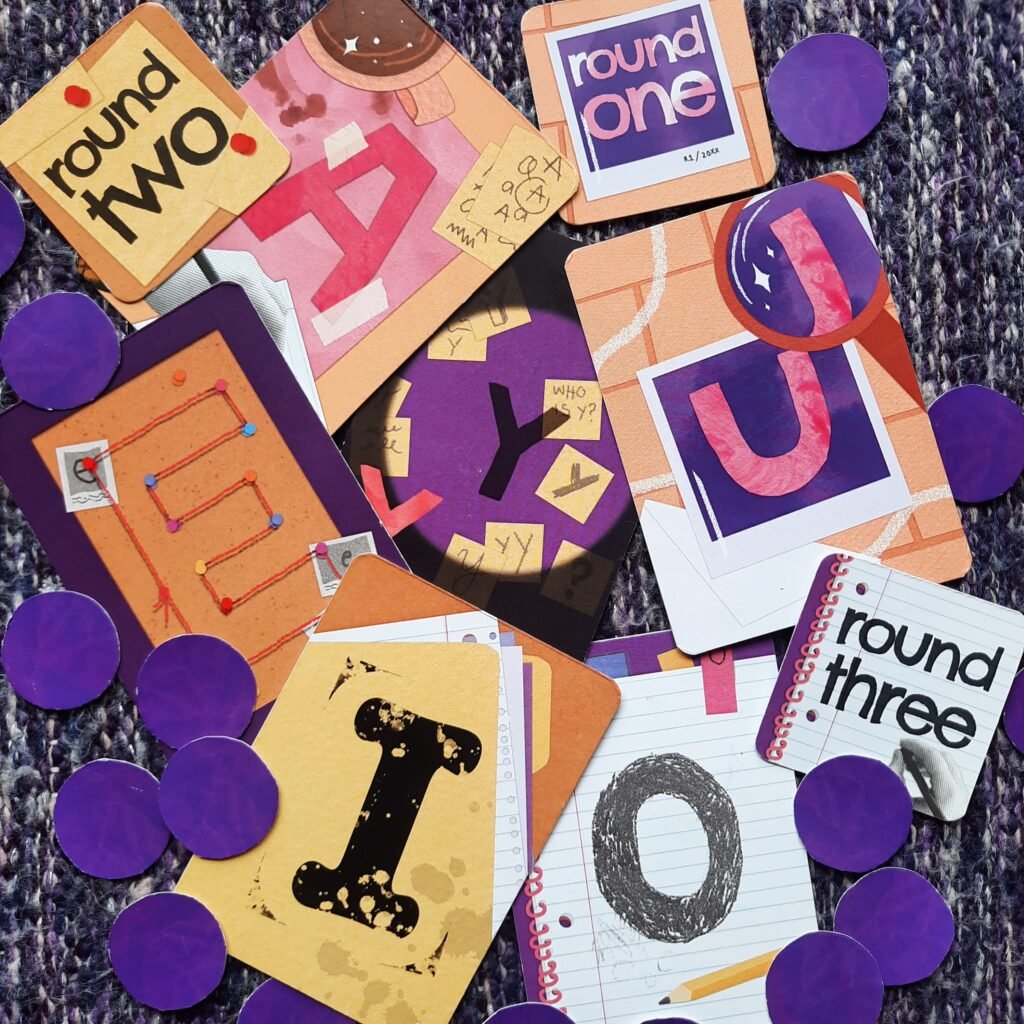
Everyone knows who they are, but knows nothing about anyone else. The equation is simple: five players are vowels: A, E, I, O, U. The catch is the sixth person: Y.
You’re a vowel? Find Y, but don’t reveal too much about yourself either.
You’re Y? BLEND IN! And keep an eye on everyone else…
Then the words start coming.
One player says a clue. Tokens are taken. Or not taken. Eyes move around the table. Someone definitely should have taken a token there, right? Unless they chose not to…
Or is it Y who took a token and is trying to blend in?
Welcome to a table full of suspicion, fake confidence, wrong reads, and ridiculous accusations!
Entry: before playing the game
First impression
I’m mostly a solo gamer, but there have been plenty of times when I’ve hosted or been part of game nights. And one thing I guess almost everyone would agree on is that the quality of game nights really depends on the eagerness of the folks involved.
A little bit of participation goes a long way.
If you’re new to party games or game nights, it’s best to start small. Games that are easy to learn, easy to teach, take next to nothing to set up, and can be played on repeat.
Also… keep it simple. Interestingly, when it comes to designing games, creating simple ones is actually more challenging than it seems.
It was a couple of months ago that Nick and Adam reached out to me to introduce the MILLRAT Pack, four games they crafted for game nights. Light, easy to learn, easy to play, you know the drill. I’ve played plenty of PnPs that I later brought to game nights, but having this pack specifically designed around that setting? That’s a first!
I also interviewed Nick and Adam to know the story behind Someone’s Y, as well as the 3 other games in the pack. Here’s a bit of what they said:
“We love deduction; we love word games, and there’s a lot of design space to work with when players can be creative with their vocabulary. What if your secret identity was a letter of the alphabet, and other players had to deduce it? We experimented first with the most common letters R, S, T, L, N, E, H, I, and the goal was to somehow figure out which card was facedown on the table by saying a word with the letter you were dealt. It didn’t work. So we moved on to vowels as we remembered from grade school that little jingle “A, E, I O, U… and sometimes Y.”
You can read the full interview here.
If you read it, you can clearly see the evolution each of these party games had with time, and I loved it.
Okay, enough behind-the-scenes, time to try it out!
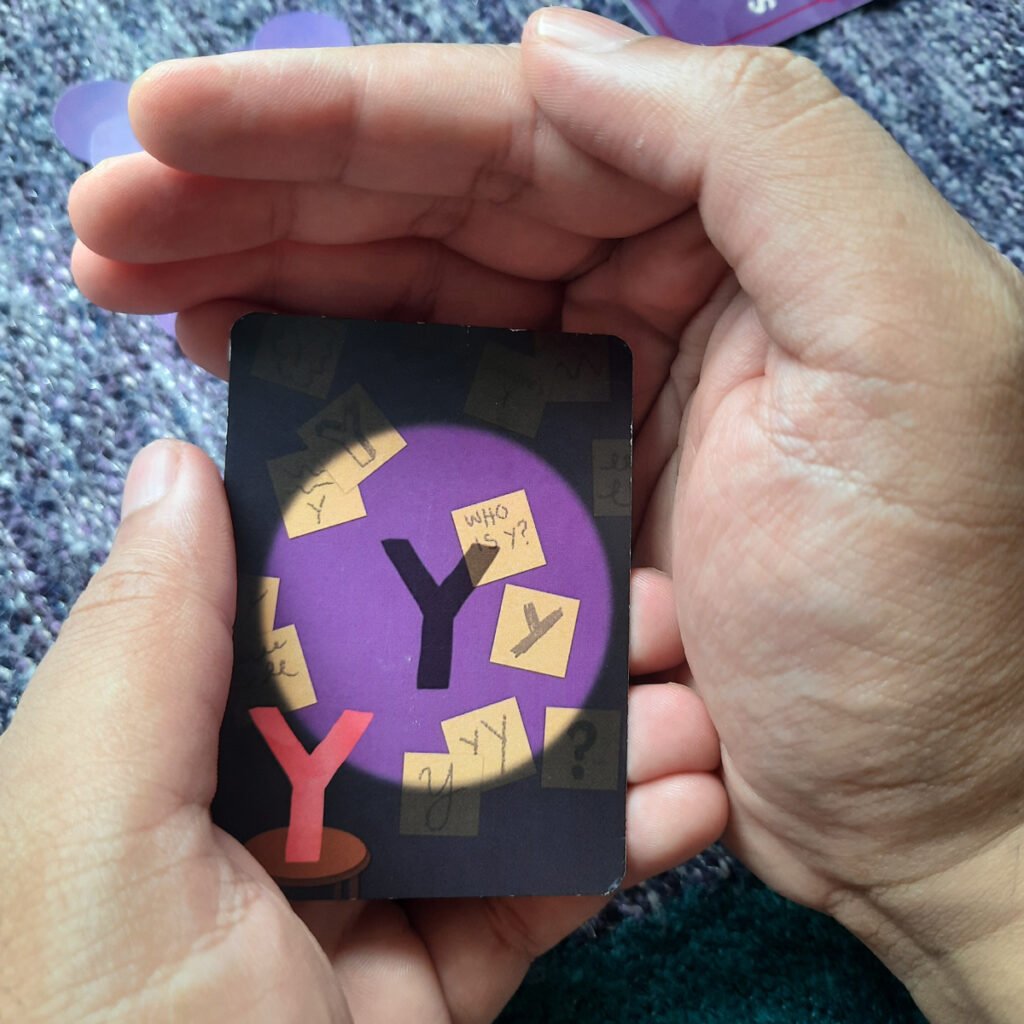
A bit on the game
Someone’s Y is a deduction card game for 4-6 players where each player is secretly assigned a letter.
In a 6-player game, five players are vowels: A, E, I, O, U. The sixth player is Y. In a 4 or 5-player game, one or two vowels are removed before Y is shuffled in, so not every vowel will be present at the table.
The goal depends on who you are. If you are one of the vowels, you are trying to figure out which player is Y. If you are Y, you are trying to blend in well enough to avoid getting caught.
On a turn, a player says one word. After that, players may take a token from the center if their letter appears in that word. The important bit is that taking a token is optional. So even if your vowel appears in the word, you can choose not to take one.
Y works differently. Y may take a token regardless of which vowels appear in the word, which allows them to pretend they belong with the others.
This is where the uncertainty kicks in. Did someone take a token because their letter was in the word? Did they skip a token to hide information? Or is Y taking tokens just to blend in?
After 3 rounds, or when the token pile runs out, players vote for who they think Y is by placing their tokens in front of that player.
If the group votes for a vowel, Y wins. If the group catches Y, then Y gets one final chance to win by correctly guessing everyone’s vowels. If Y gets any guess wrong, the vowels win.
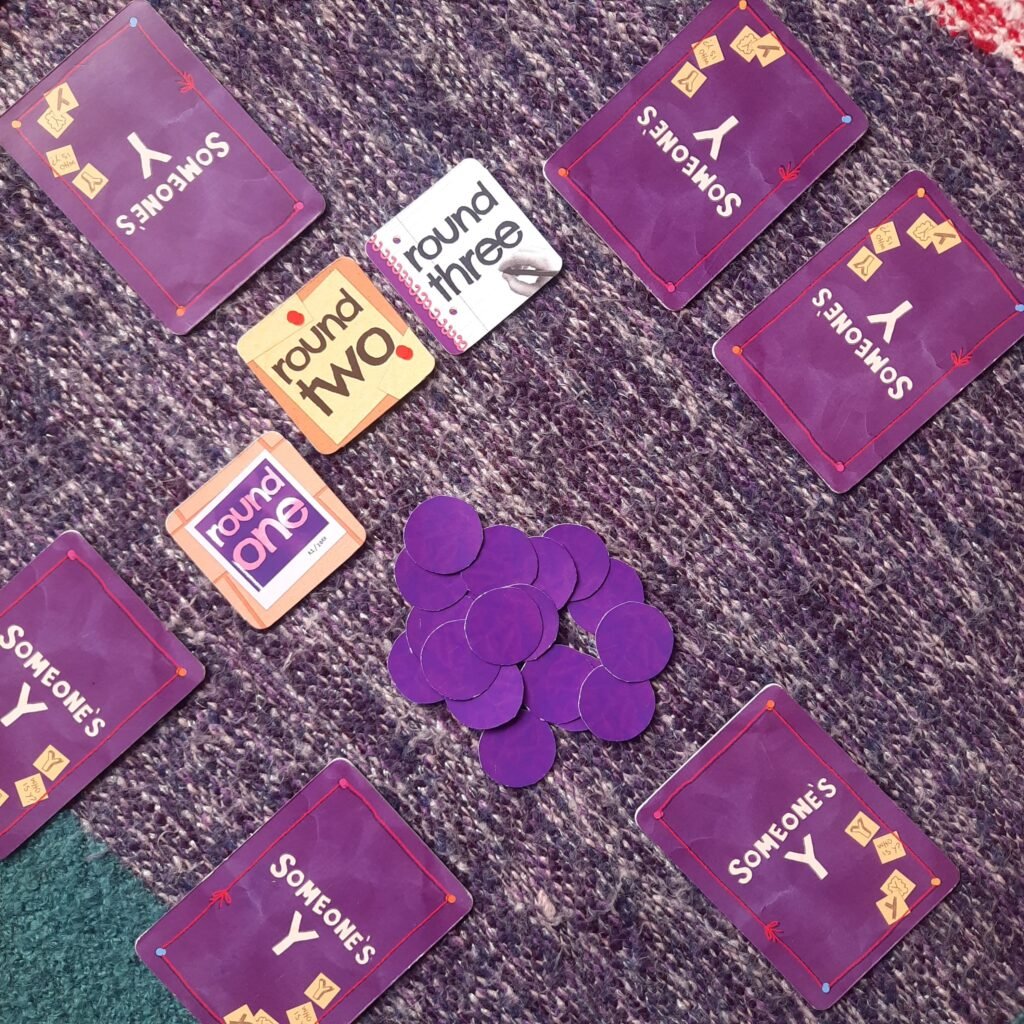
All you need
With easy setup being the essence of party games, ease of build might also be a factor. And Someone’s Y definitely is easy to build.
The components are simple to prep, with the game involving 6 cards (5 vowel cards and 1 Y card), 3 Round Tracker tokens, and 18 Vote tokens. That’s 3 pages to print.
You’ll need a 1-inch circle punch to cut out the tokens, or you can get adventurous and grab a pair of scissors too!
I had my cards laser-printed and rounded the corners with my Kadomaru Pro.
I really loved the artwork of the game, in fact, across all 4 games. More on that in a bit.
Let the game night begin!
Entry: after playing the game
Findings
The one rule that changed it all
The real tease in Someone’s Y begins with a simple choice: do you take the token, or not?
At a glance, the flow is simple. A player says a word, and if your hidden letter appears in that word, you may take a token. But because you are NOT forced to take one, every token choice starts carrying meaning. Or at least, it looks like it does…!
That is where the game opens up from both ends.
If you are a vowel, you are trying to read the table. Who took a token? Who avoided taking one? Did they skip it because their vowel was not in the word, or because they are hiding information? Did someone take a token because their letter actually appeared, or are they Y trying to blend in?
And if you are Y, that same uncertainty becomes your playground. You are not just trying to conceal yourself. You are also watching everyone else, trying to get a sense of which vowels they might be holding, because getting caught is not always the end. If the table finds you, you still get one final chance to guess everyone’s vowels correctly.
So that one optional action does a lot of work. It gives vowel players a way to hide, gives Y a way to pretend, and gives the whole table enough doubt to keep every round interesting.
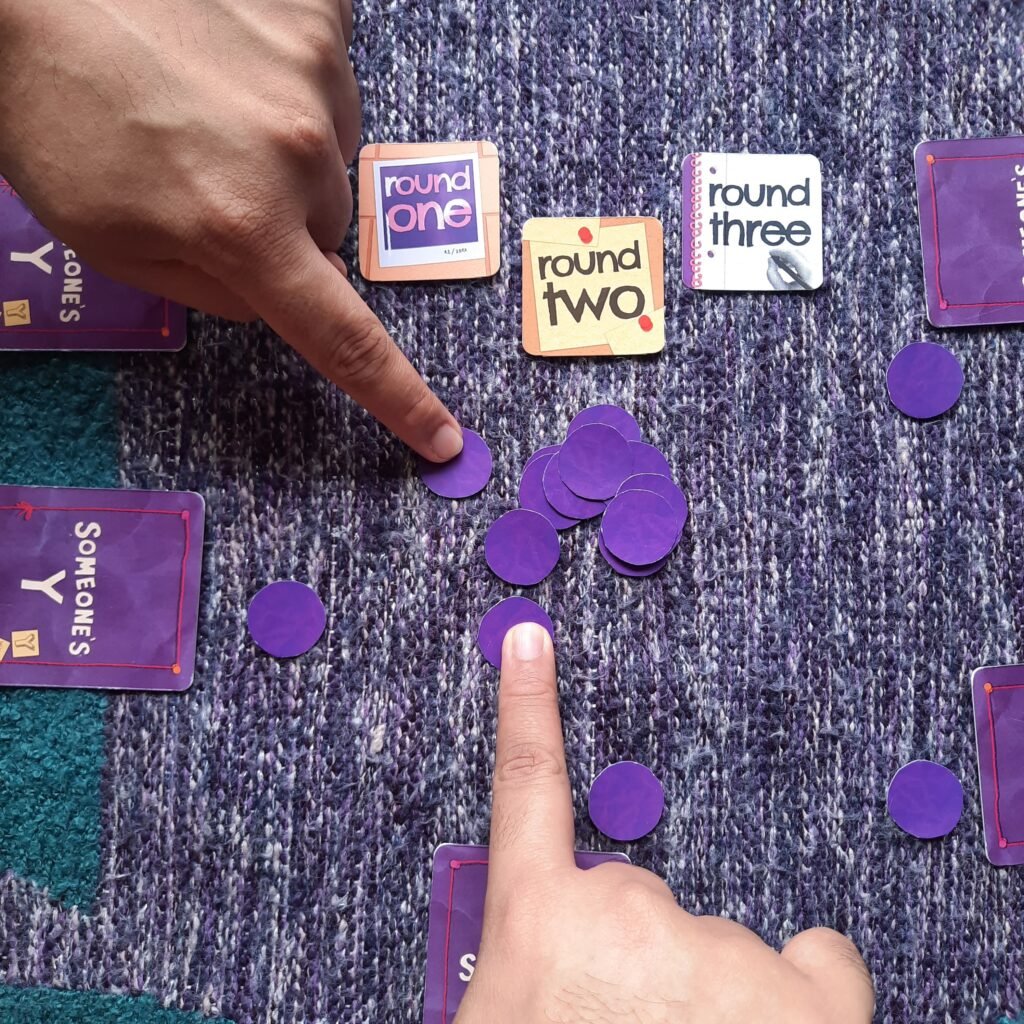
The token paradox
Yet another fun aspect of Someone’s Y stems from the tokens themselves!
On paper, taking a token sounds like a simple action. Your letter appears in the word, you take one. Your letter does not appear, you stay quiet. But because taking tokens is optional, the decision becomes a little trickier than that.
Take too many tokens, and you might start revealing your identity. The table may slowly begin to notice which words made you react, which letters you might be connected to, and whether your choices are lining up a bit too neatly.
But avoid taking tokens too often, and you create a different problem for yourself. Because tokens have their perks.
Once per game, you can spend 2 tokens to peek at another player’s card. That can be huge, because it gives you one confirmed piece of information in a game where almost everything else is built on suspicion. For the vowels, that peek can help narrow down who Y might be. For Y, it can help prepare for that final guessing attempt if the table catches them.
And then there is voting!
After 3 rounds, those same tokens become your votes. So if you have been too careful and barely collected any, you may have protected your identity, but you also walk into the final vote with less power to influence the table.
That is the paradox.
The more tokens you take, the more useful tools you have. But the more visible you become. The fewer tokens you take, the better you may hide. But the less you can actually do when it matters.
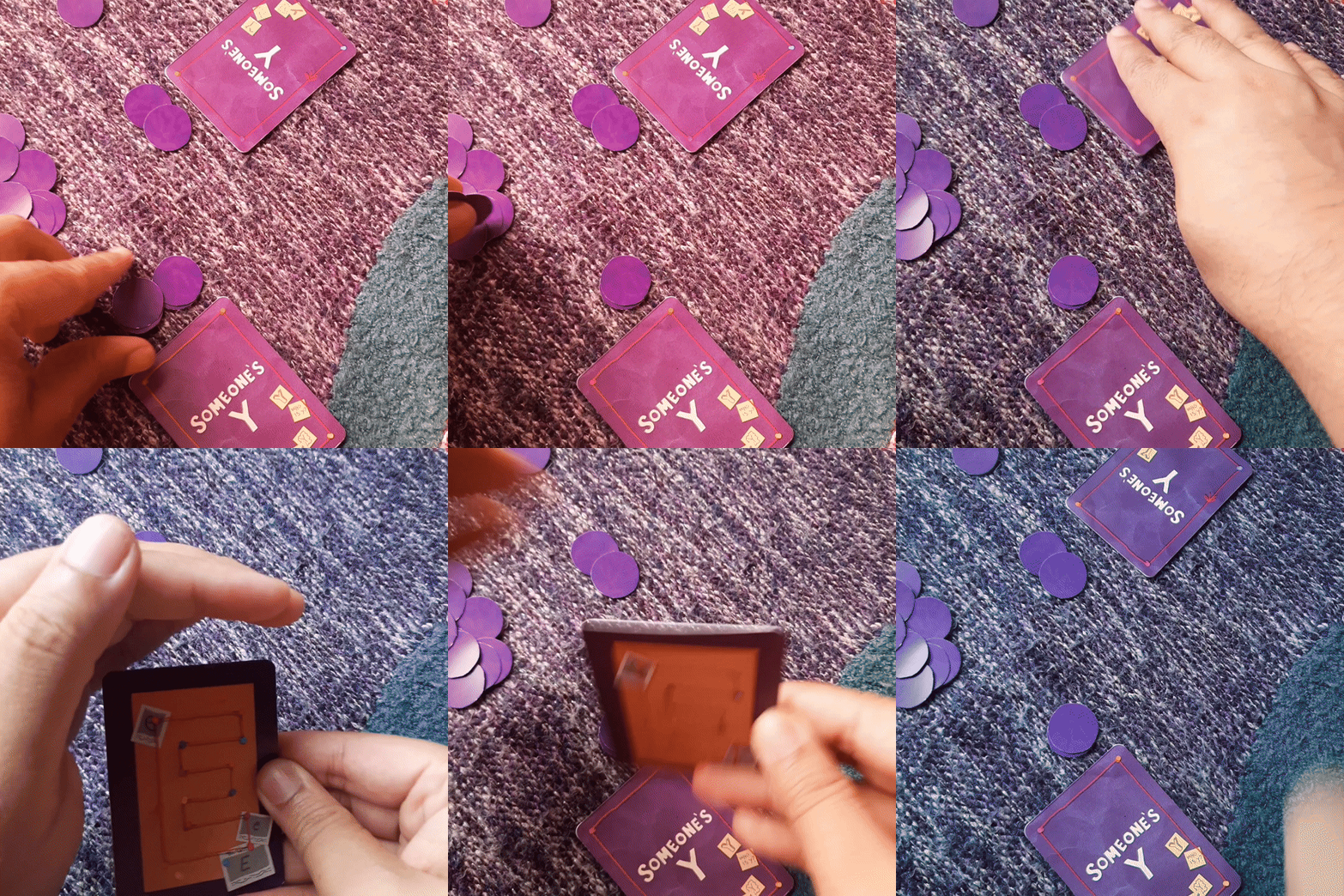
The dual life of Vowel and Y
The highlight of Someone’s Y is how different the same table can feel depending on which side you are on.
If you are a vowel, you are watching everyone through this very specific lens. You are trying to figure out who is simply collecting tokens because their letter appears in the word, and who is taking tokens just to blend in, even when it starts looking borderline nonsensical, haha.
But at the same time, you cannot be too obvious yourself. Because while you are trying to find Y, you are also trying not to hand Y all the information they need.
Playing as Y flips that whole feeling in a fun way. Like the vowels, Y is also trying to keep things ambiguous. But Y has that extra pressure of watching everyone else closely, because getting caught does not automatically mean the game is over. If the table finds Y, then Y still gets one final chance to win by guessing everyone’s vowels correctly. So Y is hiding AND studying.
One of my friends had this weirdly awesome strategy. He was Y, but pretended to be O almost the entire time. He took tokens like an O would. He even spent a couple of tokens to peek at a player’s card, fully committing to the act of being just another vowel. Coincidentally, he peeked at O, and his vibe made the whole table believe O was Y! Haha.
That is the kind of little mind games Someone’s Y creates. You are not just asking, “Who is Y?” You are also asking who is pretending badly, who is pretending well, and who is pretending to pretend!
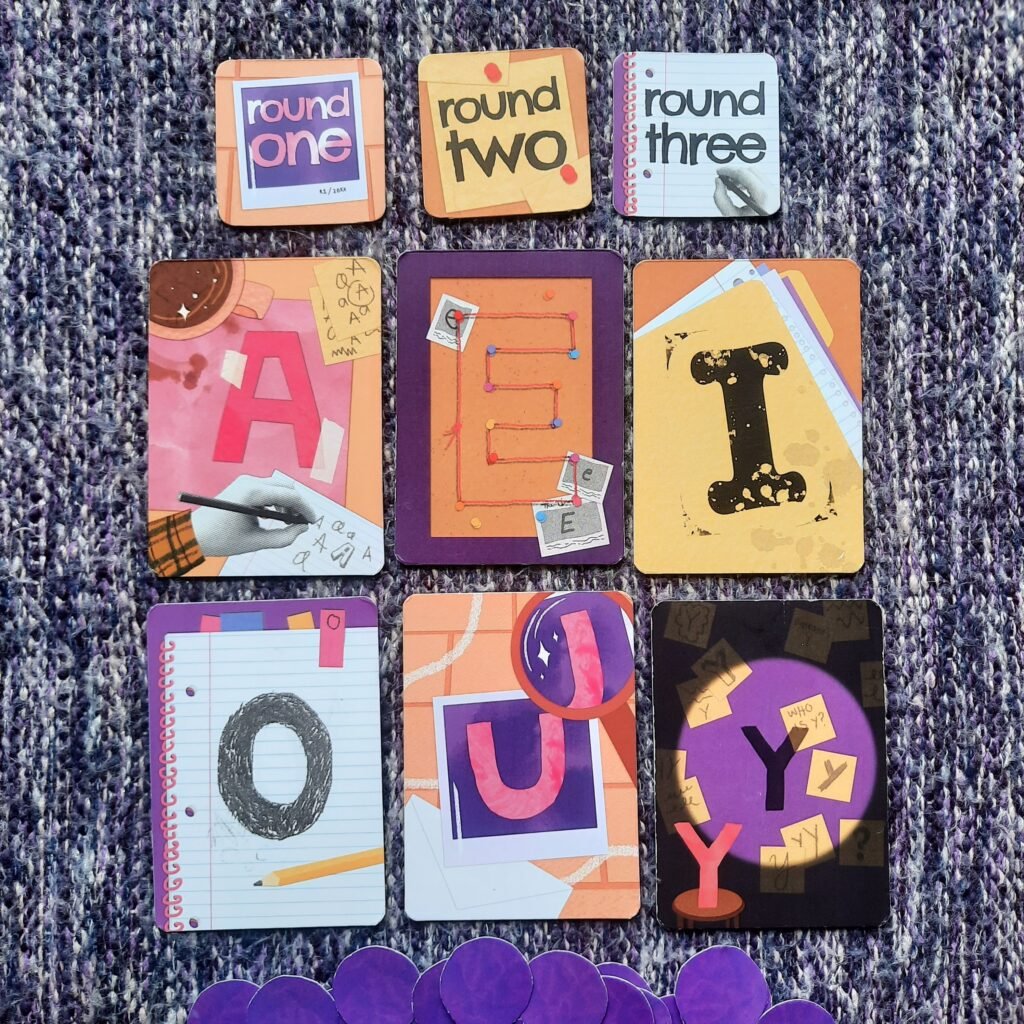
Never seen something quite like it!
Party games are expected to look, well… fun!
And Someone’s Y, along with the other 3 games in the MILLRAT Pack, certainly catches that vibe with some really unique artwork.
The instant I received the game files, I looked up who did the art. It’s Abby Ouellette, and you should totally check out her Instagram to see the kind of work she does. It’s definitely out of the box, in an incredibly awesome way!
The crafty collage style feels playful, catchy, and instantly gives each of the games its own personality.
Promise kept!
A party game that’s easy to set up? Check.
Easy to teach? Yep. It takes a couple of minutes at max.
Repeatable? Definitely. The game is short enough that one round can very easily turn into a few.
Is it fun? Absolutely! A classic deduction game, but with enough wordplay and bluffing to keep the table guessing.
So… a party game then? Aye, aye! And that is only one-fourth of the experience…
The MILLRAT Pack also has 3 other games:
Scrapbook: Dig through your smartphone’s photo gallery and turn your own memories into clues. Build an abstract collage that hints at the secret card. Can the Guesser crack it?
Footfalls: Race your rat rivals to the abandoned picnic. Use special abilities to outmaneuver your foes. Stay alert or sink in the roaring waters below!
Bad Eggs: Big omelets score big. But one bad egg might spoil everything. How far will you whisk it?
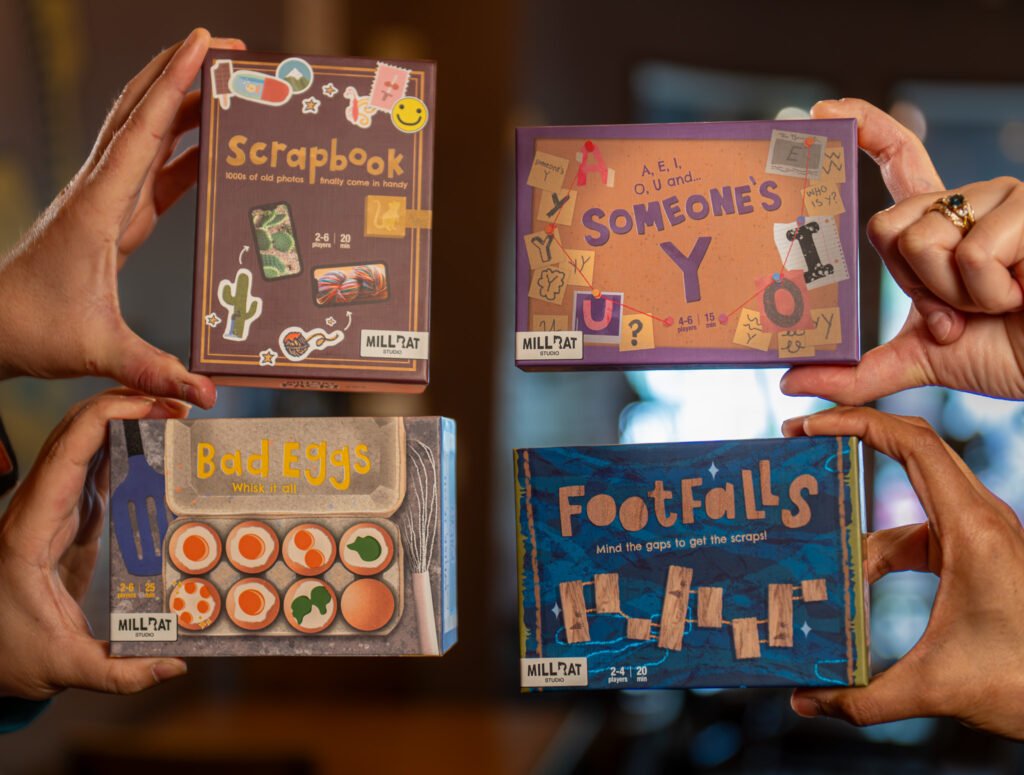
Get the party started!
It’s not every day that I get a pack of PnPs landing on my table, but thanks to Nick and Adam, the MILLRAT Pack has certainly lived up to its hype, and I’ve only played one game so far!
There are still 3 more waiting for me, and I can’t wait to try them out.
You’ve got less than a week to back this gem of a pack on Kickstarter. There’s a print-and-play pledge waiting for you too 😉
Recommended items
Game Overview
Publisher: Millrat Studio
Designer:Nick Federico & Adam Khoury
Artist: Abby Ouellette
Number of players: 4-6
Difficulty level: Easy
Rounds of gameplay needed to learn: 1 round
Game duration: 5-10 minutes
Available on: Kickstarter
Theme: Deduction card game | Finding the imposter
Number of pages and color: 3 pages (color)
Assembling difficulty level: Pretty easy. Crafting 6 both-sided cards, cutting 18 round tokens
Lamination: Not recommended
Additional elements required: 1-inch circle punch and a corner cutter
Travel-friendly: 10/10
Shelving friendly: 10/10
Rating from PnP Time: 8.25/10

Tas is a game designer and blogger based in Bangladesh, with the dream of exploring the world of games and introducing it to anyone new to it.