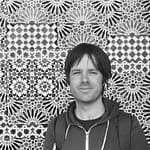
Florian Fiedler

I’m a big fan of games that not only feel good, but also create room for new experiences. Whether it’s playing chess in a dungeon that thinks like a grandmaster in Rook & Ruin, or navigating deep space through an engine builder in VoidRoll, Florian always manages to keep things fresh.
It’s been a pleasure getting to know him over the past few months, and here’s a small interview I conducted with him so you can get a glimpse into his thoughts on crafting these gems.
What inspired you to start designing games?
I would go as far back as playing Catan as a child. Naturally, we played LEGO, Chess, and everything featured in those “50 Games Collection” boxes; Halma with our grandmother, Nine Men’s Morris, Rummy. Basically every classic board game you could play growing up in the 90s, like Risk, Game of Life, and Monopoly.
Gaming on and offline has always been the biggest part of my life. Growing up with a brother two years younger, we always added extra house rules to our games, created RPGs when playing Playmobil, or took part in LEGO construction contests. The world was our oyster.
For a long time, I couldn’t get that “Ikigai” concept going for me because I never thought gaming would solve towards anything realistic as a career. Once I accepted that games were an acceptable answer, it clicked. Playing and creating games is what I could do everyday. Thankfully, creating Print and Play (PnP) games allows me to do exactly that.
Can you walk through the biggest challenge you faced while designing a game, and how you overcame it?
To me, the biggest challenge in any game is simply making it fun.
I usually start with a mechanic I want to make work, a set of components I want to use, or just an idea worth pursuing. I establish the core rules and principles at work and go for it.
The reality is, the first tries mostly suck. If they work conceptually right away, that’s great, but usually, it takes a few attempts. The challenge is bridging the gap between how playing feels versus how I want it to feel. I have to analyze what is missing and come up with solutions- adding new layers, tweaking numbers, or sometimes scrapping a mechanism entirely.
Overcoming it is just persistence; at some point, it clicks, runs smoothly, and becomes interesting to play.

What's your process behind designing a new game?
It’s very much an iterative cycle based on the challenge I mentioned above. It always starts with a “spark”- a specific component I want to use or a mechanical interaction I want to explore. That is quickly followed by a rough prototype and then a rigorous back-and-forth of trial and error, tweaking and cutting until the fun emerges from the systems.
Do you have any upcoming projects or games that you’re excited about?
I am stoked about Essence, coming up February 10th! It features art by Vittoria Pompolani (@bonedustoff), whose gritty style I really admire.
Why am I excited about Essence? It uses a customizable “skill-band” action point combat system that scales with your total party level. I love my games to allow for variety, map editors, and many ways to play. I also try to bring as much depth as possible with the least amount of preparation and components- though I admit the component count tends to grow during development! (You can read a dev diary on the combat system on the Essence Gamefound page).
Besides that, I am running a community PnP contest this Spring with Chris Backe called the “PnP Bundle.” We know there are many designers out there who want their games published and to make some decent money off them, and we want to help make that happen. Submissions are open until mid-February at pnpbundle.com.
What advice would you give to aspiring game designers, especially those interested in print-and-play games?
Just do it. Yeah, that’s Nike’s line, but it really is as simple as that.
Have people playtest your games early. Don’t get too attached to your first ideas; try to make them better with every iteration. The biggest question to ask yourself is if you are doing this as a hobby, a side gig, or a potential career. One can develop into the other—you don’t have to commit from the get-go.
Print-and-play games are the easiest way into the scene. Create, put yourself out there, and don’t be shy to run a small campaign to test the waters.

What tips would you give to game designers preparing to launch their first crowdfunding campaign?
Don’t overthink it.
Create your game and pretty it up. Reach out to ten people who would preview your game in exchange for a review copy. Put up a nice page on Gamefound or Kickstarter. Post about your game in a few relevant Facebook groups and run your campaign for a tight 16 days (Tuesday to Thursday is usually best).
Don’t worry about ads or complex marketing funnels for your first one. Your workflow will improve and your reach will grow with each game. Eventually, you will make some bucks off it. Just get the first one done!
'Minds Behind Games' is powered by Boardssey

Boardssey is a game-changer for board game designers, streamlining scattered ideas into published games.
With tons of cool tools to explore, Boardssey optimizes every stage of the creative journey, helping you centralize your designs, track and assess playtest feedback, and present your games professionally to publishers.
Are you interested? Well then, try it for free!
Tas is a game designer and blogger based in Bangladesh, with the dream of exploring the world of games and introducing it to anyone new to it.