Iron Quest: The First Ember
The wind hits your face as you sail into the open sea.
You are holding a map, but it feels more like a dare. Islands scattered across the North, separated by deep waters and silence…
Your crew is standing behind you.
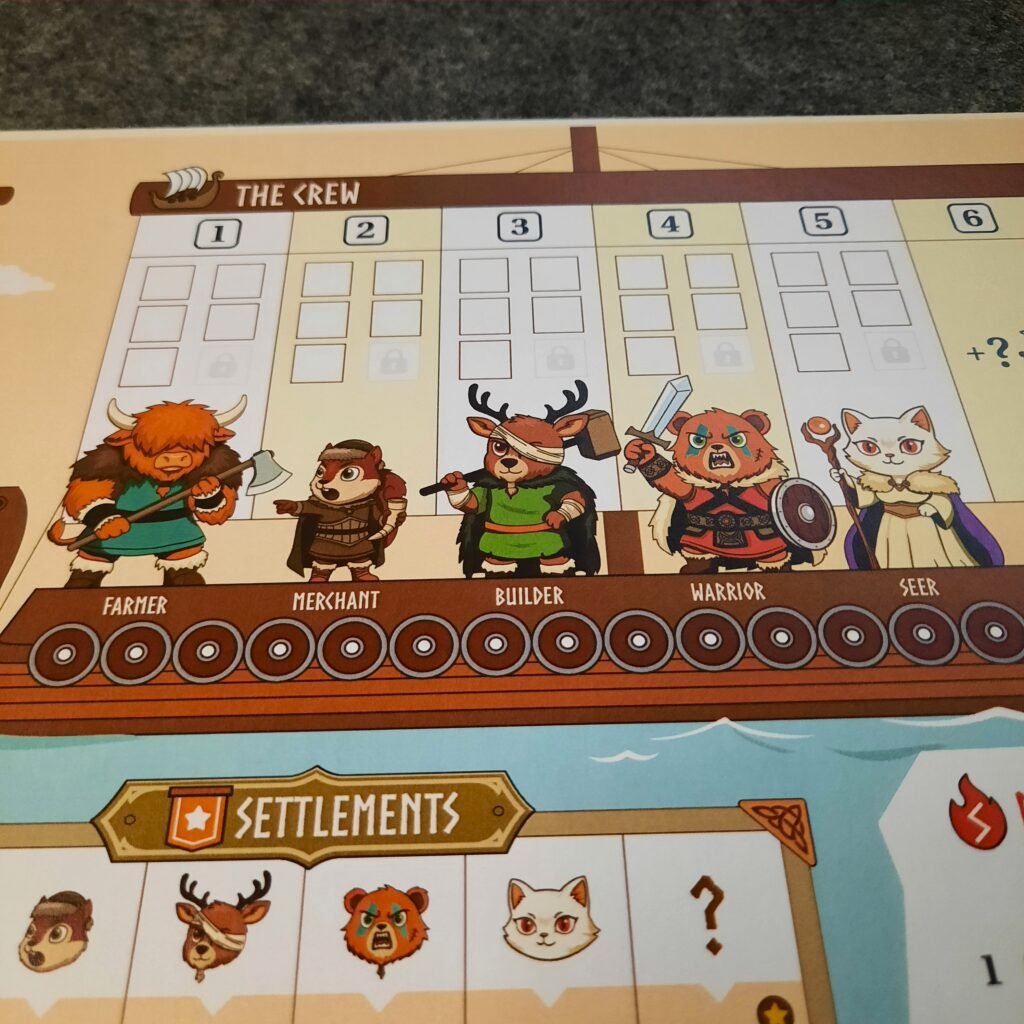
“What’s our first move, boss?” asks the Warrior, the one you will need for setting up camps and holding your ground when trouble finds your settlements.
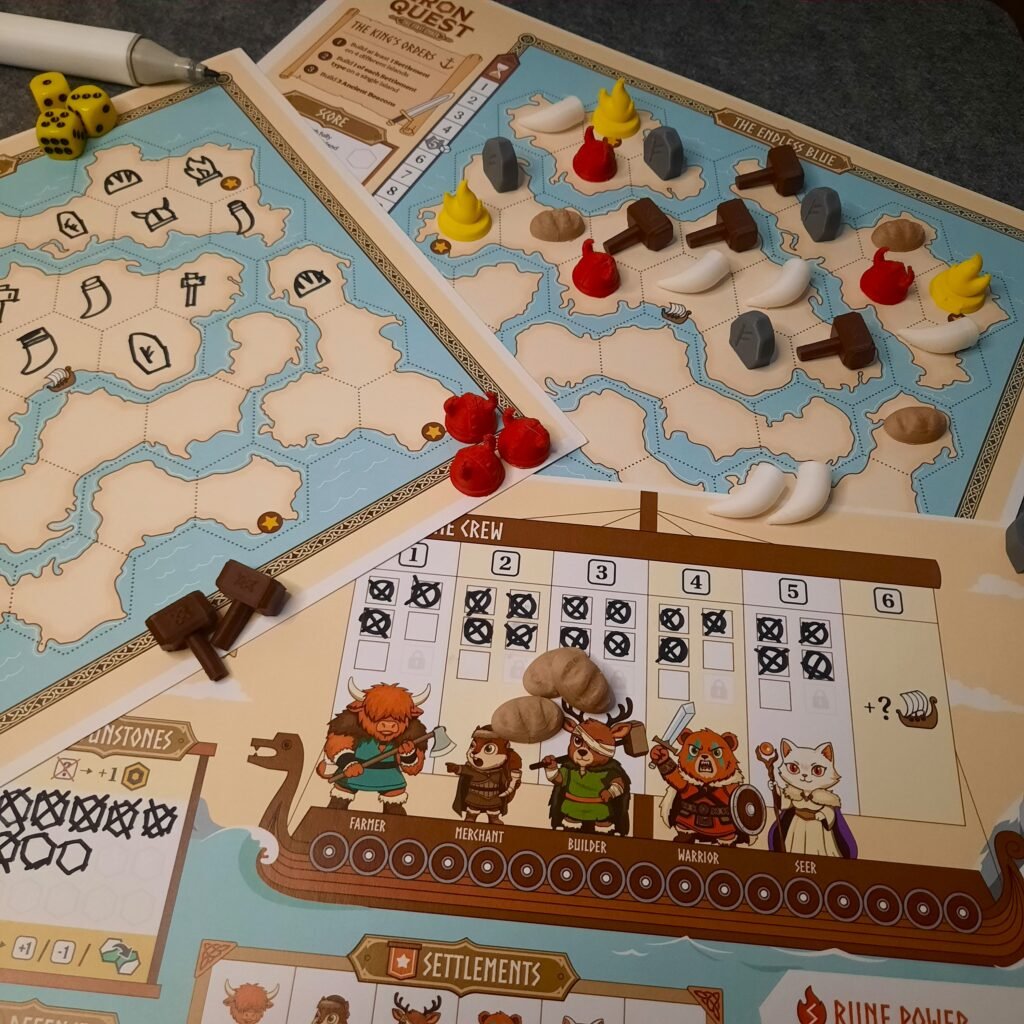
Not a big crew, but you have five able crew members to make the most out of: the Farmer for farms, the Merchant for markets, the Builder for workshops, the Warrior for camps, and the Seer for temples.
But settlements are not the only thing you have in mind.
You have King’s Orders to fulfill. Beacons to light. Settlements to defend from foes. Sunstones to gather if you want to cross the waters and reach farther across the North.
But you do not have forever.
“Prepare yourself,” you say, eyes fixed on the first island ahead. “We have the whole North to master.”
Then you turn to the Builder.
“You’re up.”
The game is on.
Entry: before playing the game
First impression
More than a month ago, I got to know about Iron Quest: The First Ember through the buzz around its absolutely adorable 3D printed pieces.
A 3D roll-and-write? That’s a first.
It did take me back to last year’s Micro May, when I played OQUO, my first-ever 3D PnP. And that was a good one. It paid tribute to a game once played by Nomads with flat stones on the ground.
Now, the first thing I checked was whether the 3D pieces were mandatory in Iron Quest. They are not.
Which is good. Not everyone will have access to a 3D printer, so it is great to see that being factored in. But that also gave birth to another question: do the 3D pieces elevate the experience?
Time to find out!
The 3D pieces aside, I am a big theme person, so the whole Viking and sailing side of the game pulled me in too. The map slightly reminded me of Around the World in 15 Minutes, a Shiny Pigeon Printables classic. I always like a good old map in games. It gives you a sense of travelling places.
Enough chit-chat. Let’s see what the game is like.
A bit on the game
Iron Quest: The First Ember is a game for 1 to 4 players, where each player takes the role of a Viking captain sailing into the North to discover islands, build settlements, defend their lands, and fulfill the King’s Orders.
The game plays over 15 rounds. Before starting, players check the King’s Orders on the map sheet, as these are the main objectives that must be completed before the game ends. Failing to fulfill all of them by the end of Round 15 means immediate exile with zero Glory Points.
Each round starts with 3 dice being rolled. In multiplayer, all players use the same dice results simultaneously to perform their own actions. The dice can be used individually or combined, and once a die is used, it cannot be used again in that round.
There are three main actions: recruiting crew, building settlements, and scavenging for Sunstones.
To recruit, you use a single die matching one of the crew types: Farmer, Merchant, Builder, Warrior, or Seer. These crew members are then used to build different types of settlements.
To build a settlement, you must have the required crew member and use one or more dice to meet the settlement’s minimum value. New settlements must be built adjacent to an existing one. If you want to build on a new, untouched island, you need to spend 1 Sunstone to cross the sea.
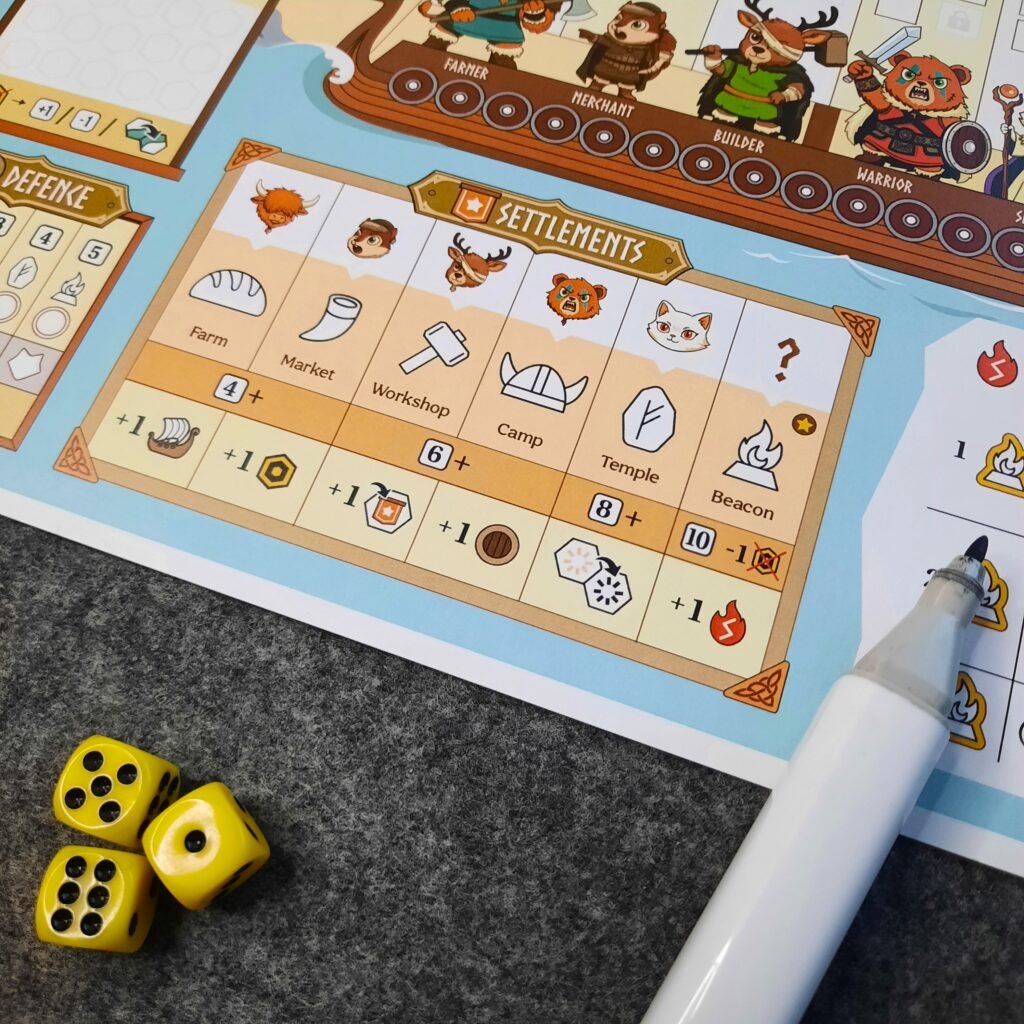
Each settlement also comes with an ability. Farms help recruit extra crew. Markets give Sunstones. Workshops can build an extra settlement. Camps activate shields on the Defence Track. Temples trigger the ability of an adjacent settlement. Ancient Beacons are built on specific marked spaces and unlock Rune Powers.
Sunstones can be gained by scavenging or through certain settlement abilities. They can be spent to modify dice, reroll dice, or cross the sea.
During certain rounds, the Raiders may attack before players take their actions. When this happens, dice are rolled to determine which settlement types are targeted. If a matching shield has already been activated on the Defence Track, the raid is blocked. If not, that settlement type becomes invaded, and its ability is disabled until the Raider is defeated. To defeat an active Raider, you need to build a Camp and activate a shield for that settlement type.
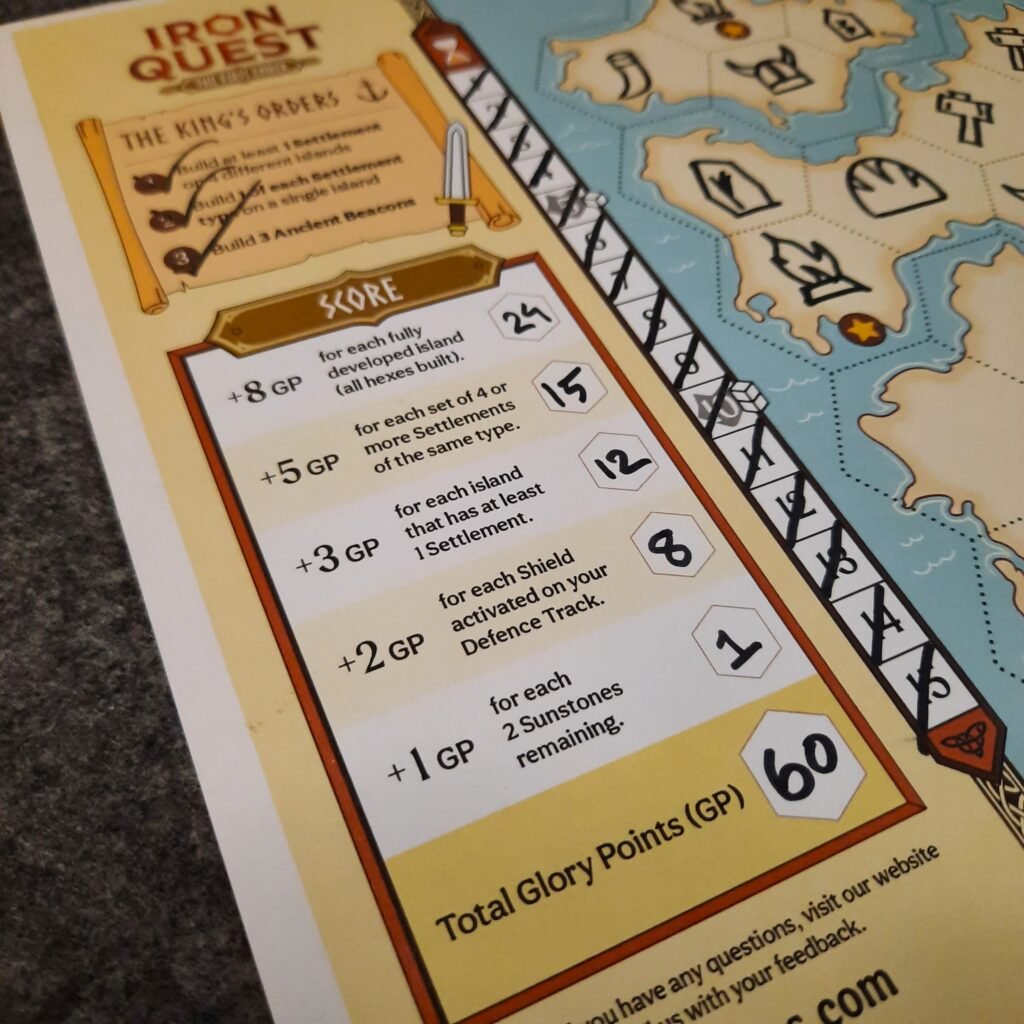
The game ends after Round 15. Players who completed all King’s Orders score Glory Points from fully developed islands, sets of 4 or more matching settlements, islands with at least one settlement, activated shields, and remaining Sunstones. The player with the most Glory Points wins.
All you need
Not much!
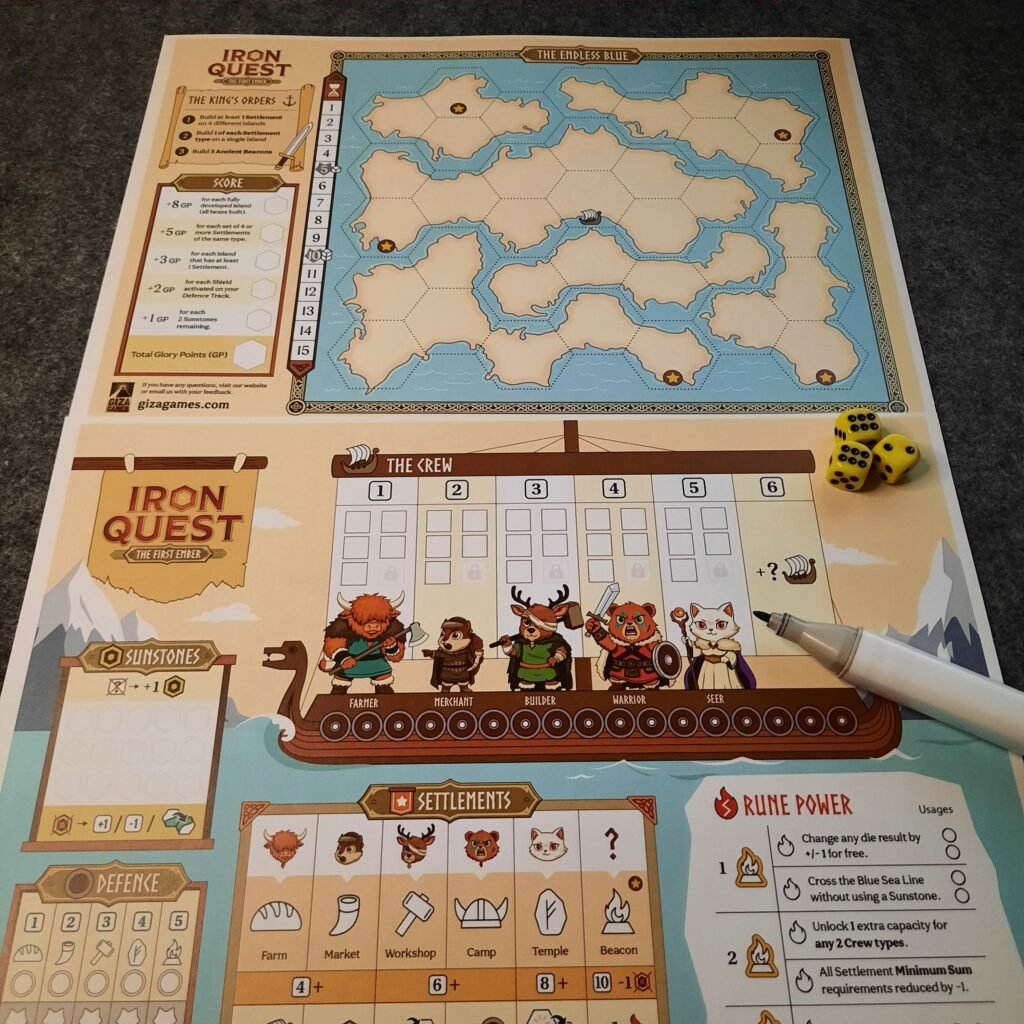
You need to print 2 game sheets per player, grab 3 D6 dice, and have a marker/pencil ready. That is enough to set sail.
Since it is a roll-and-write, you can also laminate the sheets for replayability and use a dry-erase marker instead. Always a good route if you want to play it more than once without printing the same sheets again.
Now, if you want to bring the 3D printed pieces in, you will need 33 settlement tokens per player. That includes Farms, Markets, Workshops, Camps, Temples, and Beacons. They are fairly small, so they should not take too much filament or time to print.
I was really curious, so I printed them out.
Time to set sail for the North!
Entry: after playing the game
Findings
A Sequencer
The more aware you are of the sequence that follows each decision, the better you’ll get at playing this game. And I really enjoyed that bit.
The crew members you recruit are the crew members you eventually deploy. The crew you deploy determines the type of settlement you can build. The type of settlement determines the special ability you trigger. And those abilities can help you with defense, crossing waters, creating more settlements, recruiting more crew members, using the power of adjacent settlements, and more.
See the sequence?
To master the North, master these sequences.
And they are not as linear as I just made them sound. Each of the 5 crew types and 6 settlement types brings variation to the game. So you have to spare a moment or two, think ahead, plan your move, and decide where your next action should lead.
Hello Opportunity Cost
One of my favorite game design concepts is Opportunity Cost.
In layman’s terms: it is the value of the next best alternative you give up when making a choice.
And this game is riddled with it.
Every round, you roll 3 dice and start the dance of how best to allocate them. Do you recruit crew? Which ones do you recruit? How many do you recruit?
Or do you deploy the crew you already have? Which one? Which settlements are you after? Which dice do you combine?
And you do not have forever to do this.
15 rounds. 15 sequences of mind-dancing over the options.
Do you focus on defense? Cause sooner or later, when the Raider rounds arrive, your settlements will be tested. Do you focus on Sunstones? Cause sooner or later, you need to cross the waters and reach new islands. There are King’s Orders to fulfill, and crucial conditions to clear if you want to earn those points.
So where do you focus? Everywhere.
But not in every round.
In each round, you work on a few things and turn a blind eye to the rest. Those options are forfeited for that round.
Folks, the magic of Opportunity Cost!
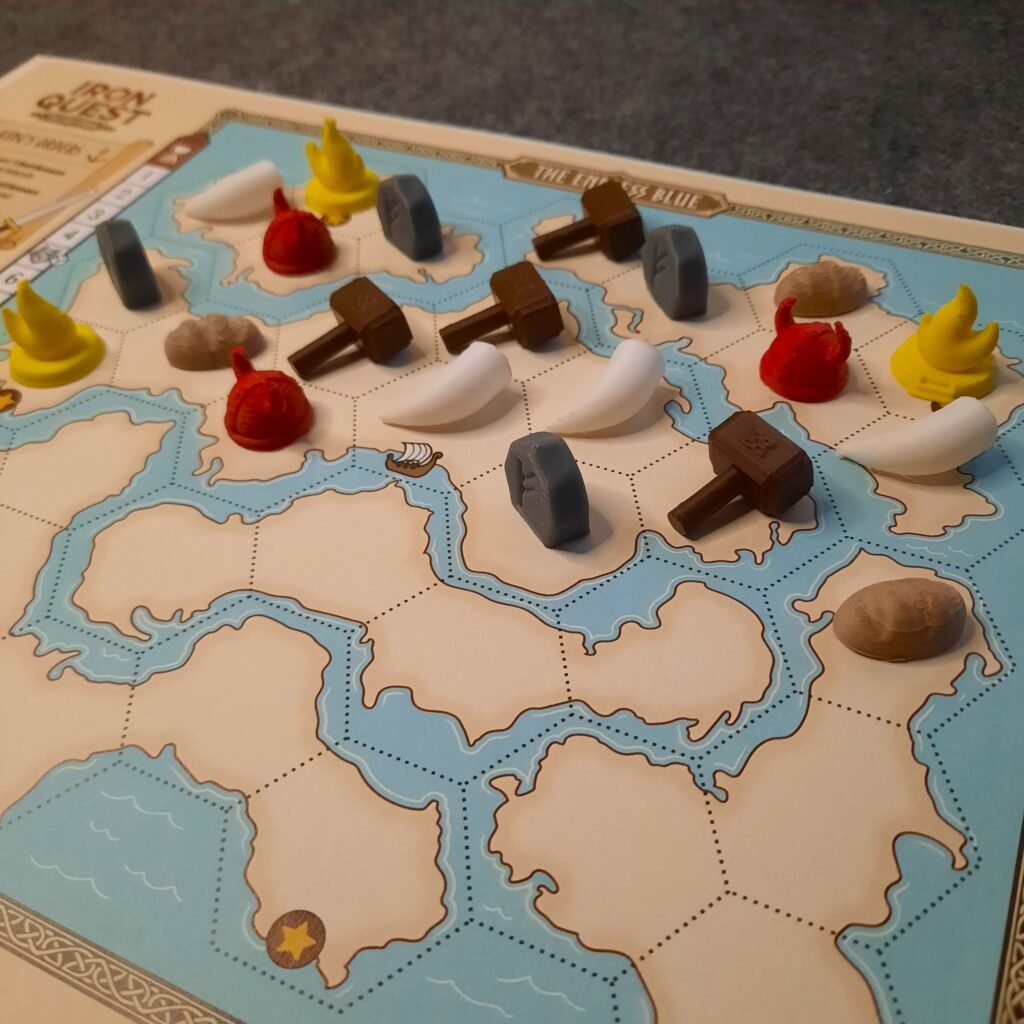
The 3D pieces!
Beware, some of them look edible!
Won’t lie, I bit the loaf a couple of times, haha. Now, having played both the base and 3D roll-and-write versions, what’s the difference?
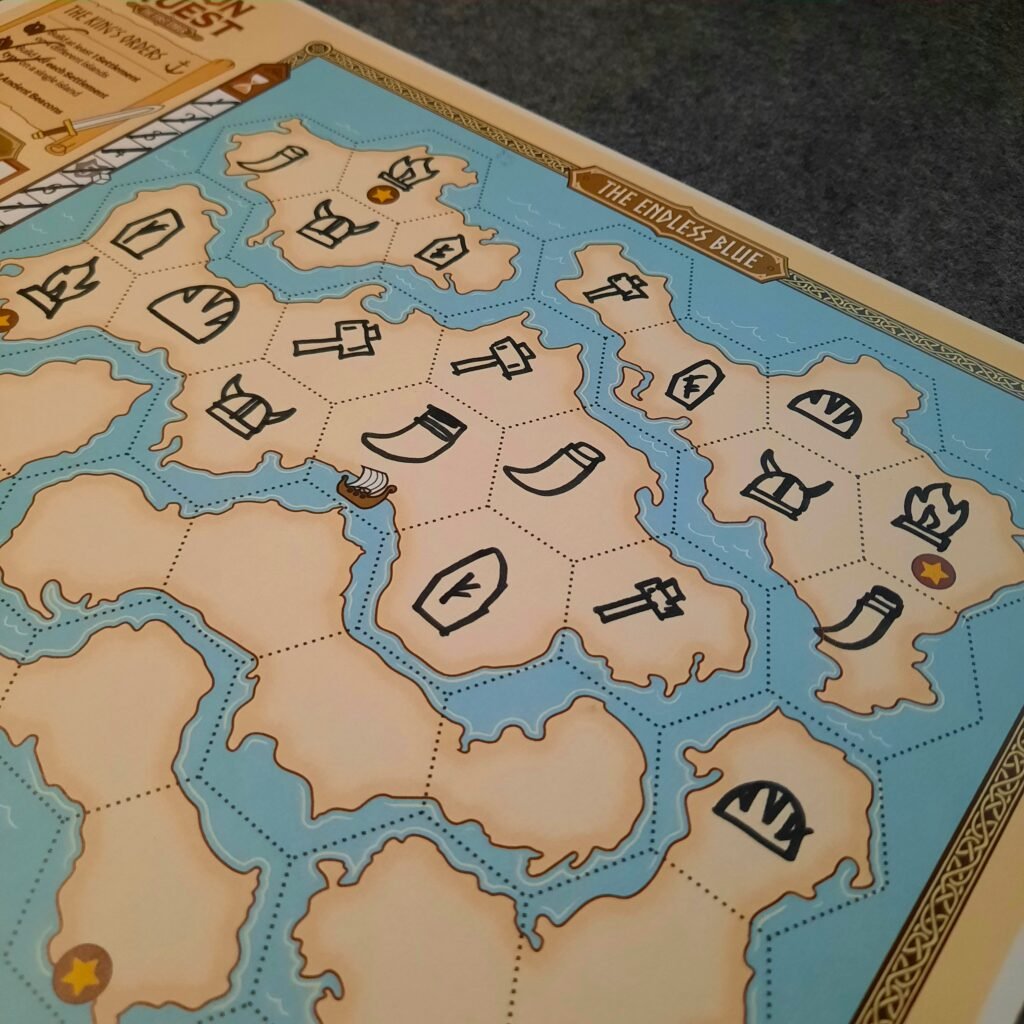
Both involve rolling and writing, by the way. The only difference is whether you draw the settlements on the map or place the tokens instead. The rest remains the same.
So, if you find it therapeutic to draw stuff on games, or if you especially want to play while traveling, go for the roll-and-write-only version. But if you want to give the map a more elevated vibe and watch the North fill up with a vibrant look every time you play, opt for the 3D pieces.
Which one did I like more?
It’s a close call, but I’d give the 3D roll-and-write the edge.
I have played tons of roll-and-writes, and any attempt to create a more immersive atmosphere deserves a spot on the table. Iron Quest does exactly that. Having those tokens beside the sheet, deciding where to place them, and watching the map slowly take shape has been quite an experience.
If you have access to a 3D printer, don’t miss out on this.
I mentioned it before, but I really appreciated how it’s optional. Not everyone will have access to a 3D printer, and it’s clear the minds behind the game respect that.
Replayable?
Putting on both my game designer and reviewer hats for this one.
I played the game with a single map and one fixed starting crew. And even after the first three plays, it felt replayable enough.
There were plenty of ways to approach the islands, different settlements to leverage, and that tight constraint of 15 rounds meant I could try a different route every time I sat down with the game.
And that got me thinking about how much more the game could open up with different King’s Orders, more maps, different starting crew choices, different powers, different Raider patterns, and maybe even different settlement conditions and abilities.
You can play this for life, haha.
I already know of several maps available for backers as rewards, so if you back the game, you are in for a treat.
Ready to set sail?
If Iron Quest: The First Ember caught your eye because of the 3D pieces, I get it. That’s exactly how it pulled me in too.
But once the dice started rolling, the game had much more going on than that.
This is a tight little race of recruiting crew, expanding across islands, triggering settlement abilities, preparing for threats, lighting beacons, and fulfilling the King’s Orders that do not wait for you to get comfortable.
You have to make some hard calls across 15 rounds. Who do you recruit? Where do you build? How much defense do you have in place before the raids arrive? How far can you push before you run out of rounds?
That mix of planning, pressure, and a little bit of ambition is where this game finds its footing.
Iron Quest: The First Ember is now live on Gamefound.
Go check it out, summon your crew, and see if you have what it takes to become the Master of the North!
Recommended items
Game Overview
Publisher: Giza Games
Designer: Zion Wu
Artist: Kay Lo
Number of players: 1-4
Difficulty level: Medium
Rounds of gameplay needed to learn: 1 round
Game duration: 30 minutes
Available on: Gamefound
Theme: 3D roll-and-write | Claim the islands, master the North
Number of pages and color: 2 pages per player, in color
Assembling difficulty level: Super easy, literally print and play
Lamination: Recommended for replayability
Additional elements required: 3 D6 dice, a pen/marker and 33 3D printed tokens (optional)
Travel-friendly: 9.5/10
Shelving friendly: 9.5/10
Rating from PnP Time: 8.5/10

Tas is a game designer and blogger based in Bangladesh, with the dream of exploring the world of games and introducing it to anyone new to it.