
Quickdraw
Main Street is too quiet for this time of day…
Doors are shut. Windows are dark. Dust drifts lazily between wooden buildings that have seen better years.
Then it starts.
Boots scrape against the dirt. A hand tightens around a grip worn smooth by use. Somewhere down Main Street, someone else is doing the same thing, only with very different intentions.
Bandits roll in, guns blazing, convinced this time will be the one where nothing stops them. The Law answers the call because it always has to, even when the odds are bad and the names on the badges keep changing.
There is no room for hesitation out here. No clean victories. Just a brief, violent moment where choices matter and luck shows its teeth.
When the smoke clears, only one side gets to walk away and tell the story…
Entry: before playing the game
First impression
If you’ve read my blogs before, you know I lean a bit toward solo games. But standing shoulder to shoulder with them are solid 1v1s. Especially the kind that really captures that last man standing vibe. And it looks like I’m staring right at one.
Quickdraw made a loud entrance in the 2025 Two-Player Print and Play Game Design Contest on BoardGameGeek, walking away with Best Theme, Best Graphics, and Best Rulebook, plus strong placements in Mechanics and Overall.
A 1v1 faceoff with excellent artwork and a standout run in the BGG contest hinted I might be looking at a banger. Consider me enticed!
A bit on the game
Quickdraw is a fast-paced, asymmetric 1v1 card game that plays out in tight, ten-minute duels. Each player takes command of one side of the conflict, the Law or the Bandits, and every match becomes a mix of risk assessment, probability, and tactical timing.
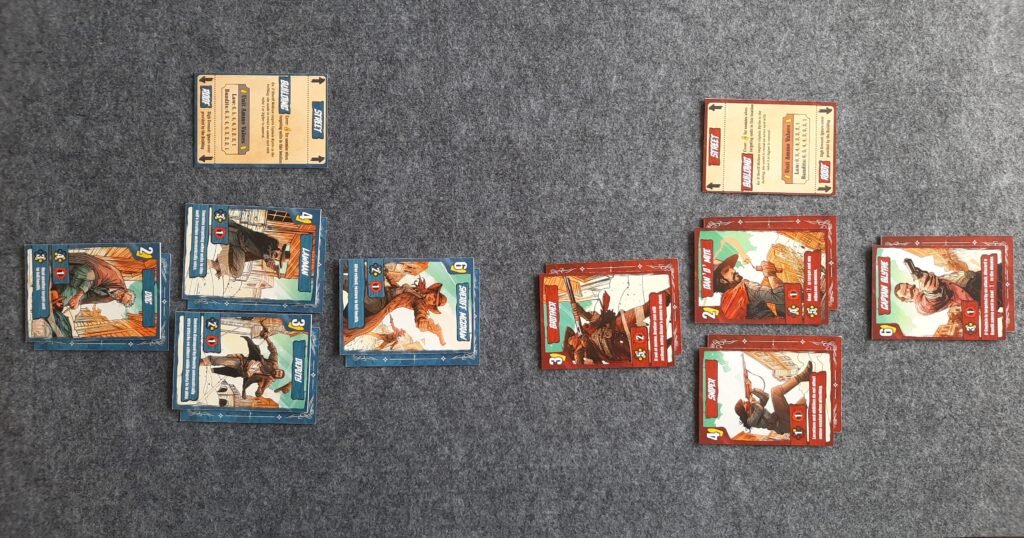
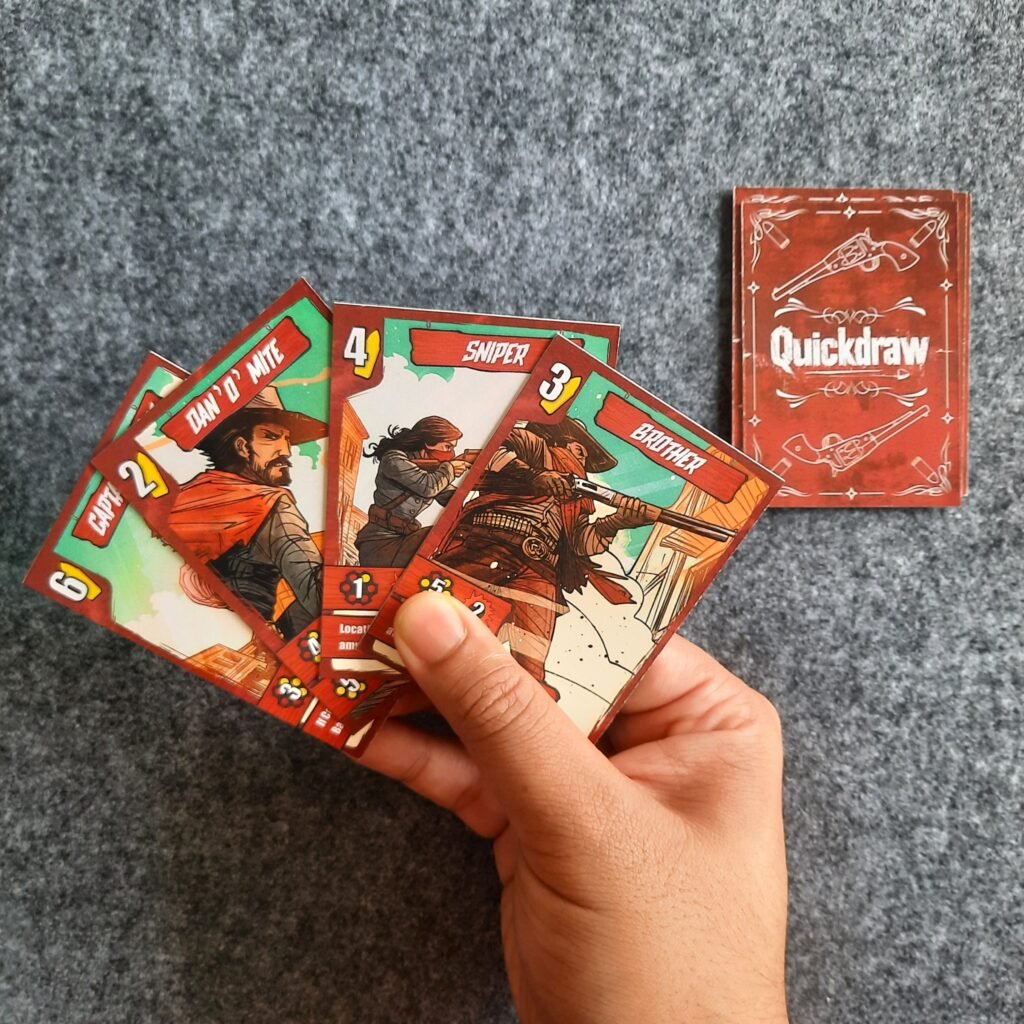
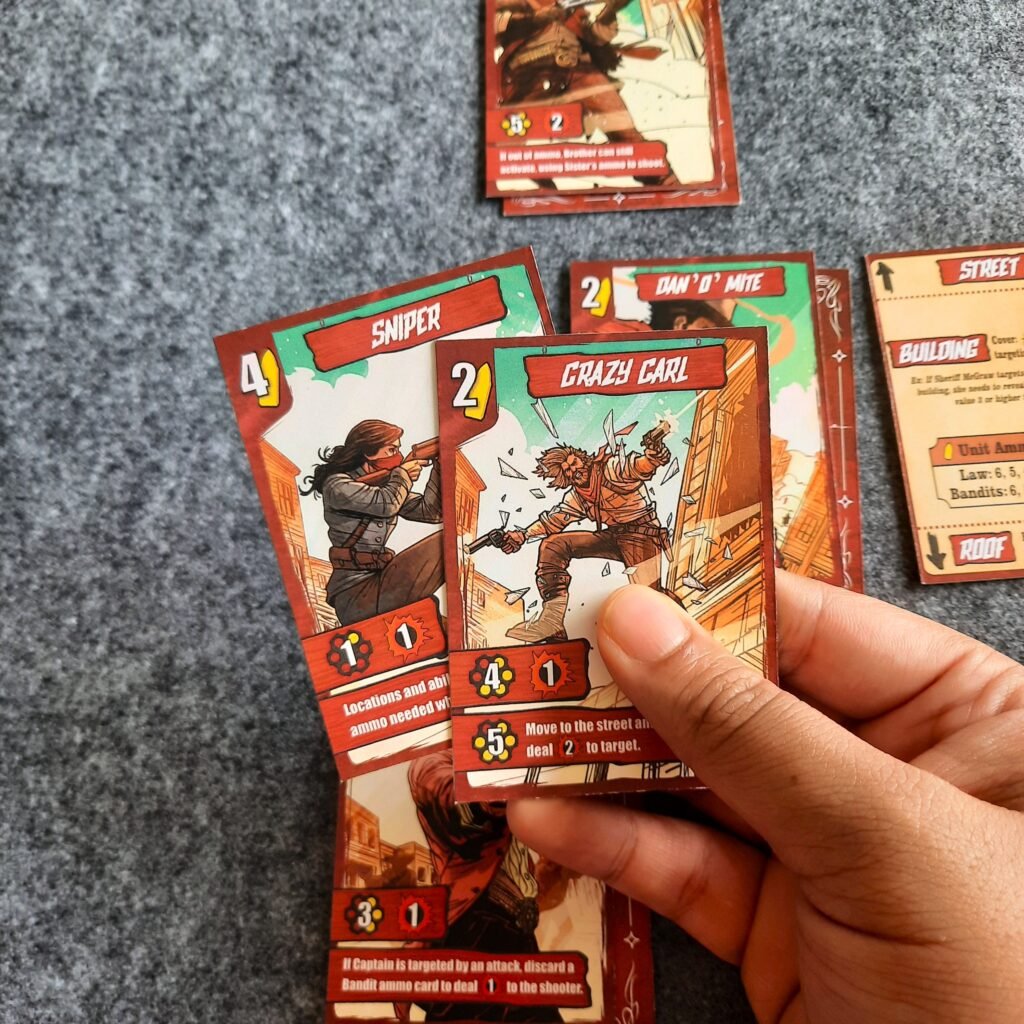
Each player is equipped with eight unique units. Before a duel begins, you choose four to deploy to the streets, while the remaining four form your ammo deck. That choice sits at the center of the game’s design. The same cards that define your team on the table are also used to determine shot accuracy through the ammo deck.
Once play begins, unit strength, positioning, and ammo draws combine to resolve each exchange. Unit abilities further shape how confrontations unfold, giving each side distinct perks to work with during a duel. Last man standing wins the round!
All you need
Preparing the game is pretty much to the point. Print, cut, and paste/sleeve a total of 18 cards. That’s it. No additional elements are required for Quickdraw!
Entry: after playing the game
Findings
Ideal shootout atmosphere
Quickdraw ties its mechanics tightly to its theme. Enemies are deployed on the street, rooftops, and inside buildings, and both placement and cover matter during a duel. Since opponents do not know which units are being deployed at the start, there is a sense of suspense around who you are actually facing.
Once the shooting begins, attention is split between watching the enemy and managing your own position and survival. That back and forth creates a deliberate rhythm of cause and effect. It feels less like a simple exchange of cards and more like a tense standoff, closely echoing the atmosphere of a classic western shootout. A big green flag in my book.
Very interesting attack mechanism
Attacking in Quickdraw is driven by the ammo system. Whether a shot succeeds comes down to the revealed ammo value and whether it meets the requirement of the chosen attack or ability. That makes target selection critical. You are not just choosing who to shoot, but when and with what odds.
Special abilities layer on top of this to add more to the strategy. They can alter outcomes, shift probabilities, or open up alternative lines of play. Together, ammo values, target choice, and abilities turn each attack into a small calculation rather than a simple action.
The attack system keeps pushing you to constantly balance your crew. Stack your strongest units on the board and your ammo deck starts to feel unreliable. Load those heavy hitters as ammo and your front line suddenly looks thin. Every duel pushes you to walk that narrow line where your crew can hold its ground and your ammo can still back it up when it counts.
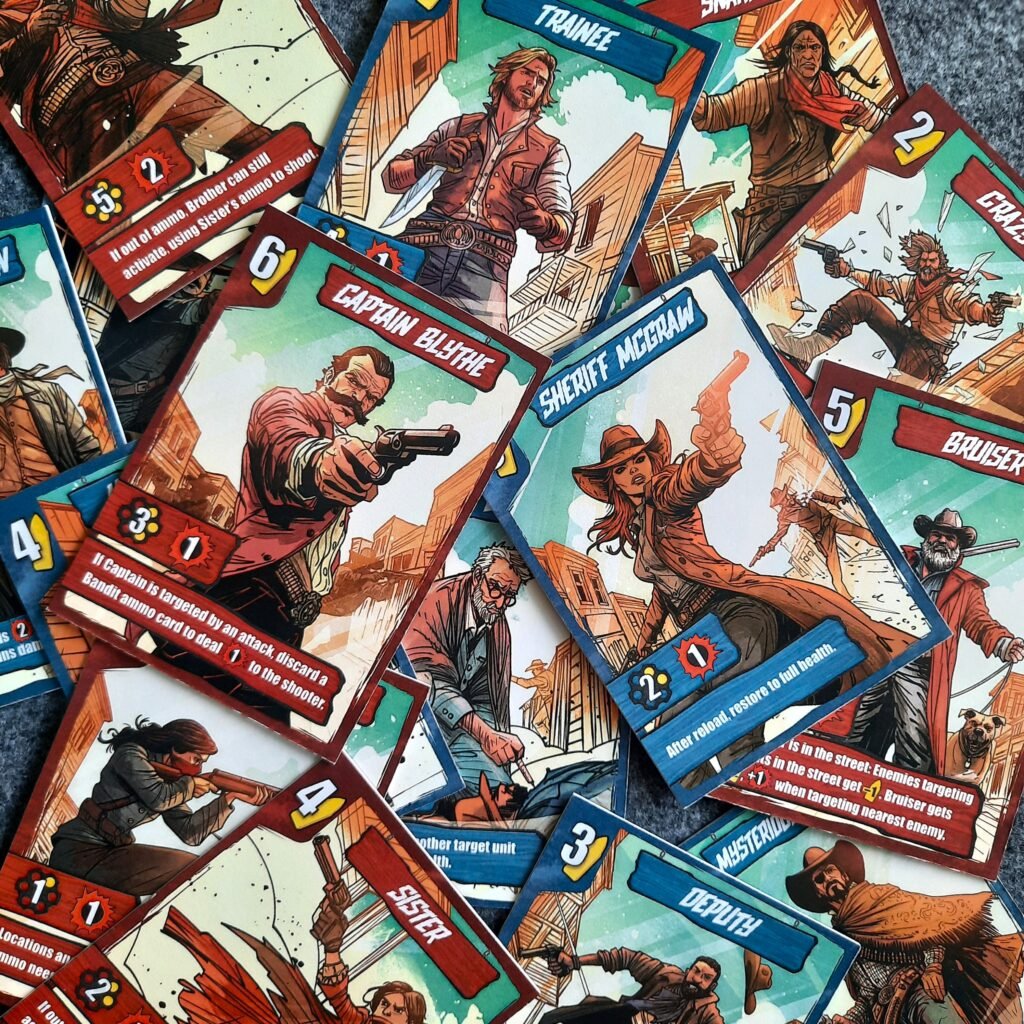
The sixteen characters
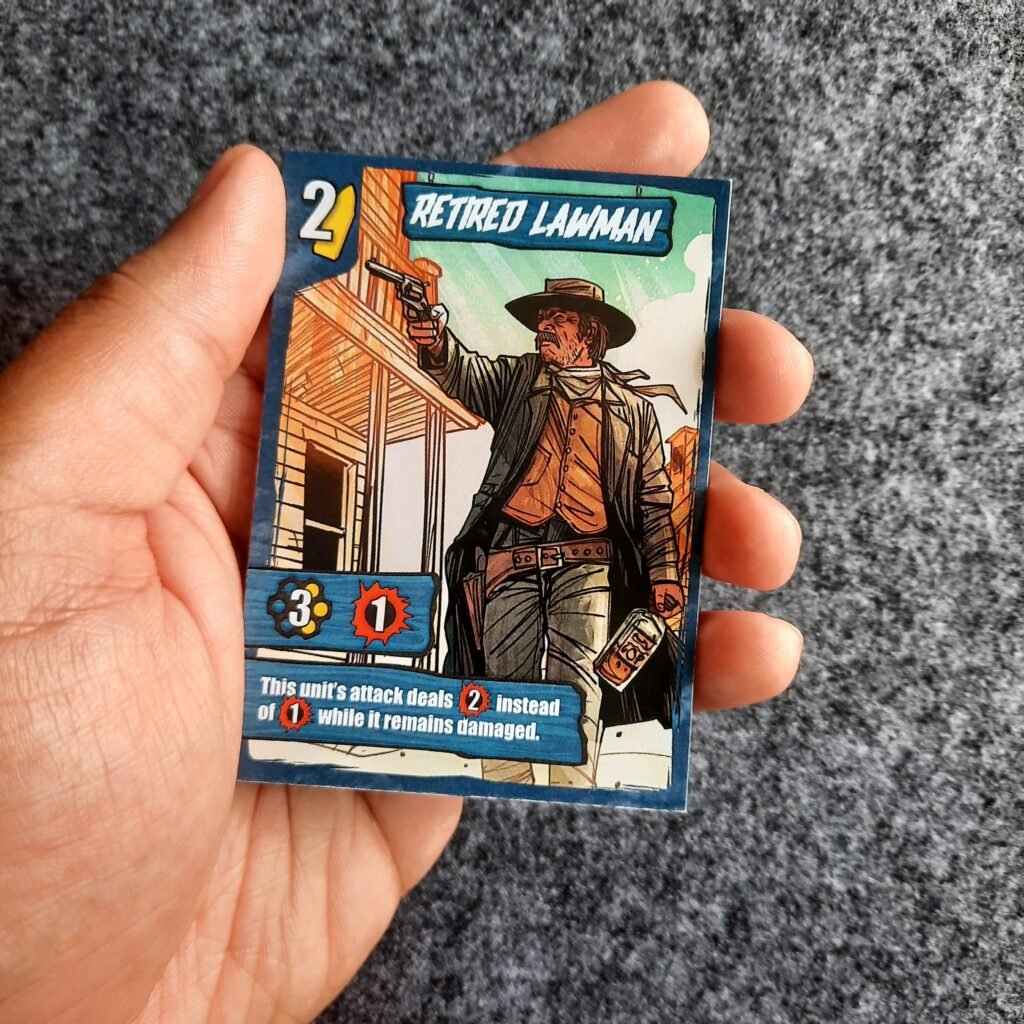
Each side comes with eight unique units, bringing the total to sixteen characters. Every unit has its own name, ammo power, abilities, and, not to forget, its look.
No two units feel the same, and their abilities deserve a closer look before getting into a duel. Understanding how to best use each unit is the only way to really make the most out of them.
Don’t start a duel without knowing how to best use each unit’s abilities. My friend skipped that part and got absolutely thrashed.
The feisty dilemma
Quickdraw constantly demands you to make decisions. Who do you deploy and who do you load as ammo? That is only the beginning.
Every turn brings another set of choices. Which target do you attack? What does that attack imply? How much risk are you willing to take with the ammo you have?
Even when a unit goes down, the questions keep coming. Do you remove it from play or cycle it back into the ammo deck?
For a game that plays in around ten minutes, Quickdraw packs in a surprising amount of decision making. It didn’t feel bloated, and kept me hooked from start to finish.
Replayable?
I think my findings have already hinted at it! Quickdraw is quite replayable.
Statistically? Here’s the math.
With eight units on your side, you deploy four while loading the other four as ammo. That alone gives you 70 distinct ways to setup your team.
Pair that with your opponent doing the same, and you are looking at 4,900 different duel setups in total. Damn!
And these 4,900 setups are:
+ before deployment locations
+ before ammo is drawn
+ before any abilities are used
Let that sink in!
Launching in two days!
Quickdraw might be one of the first print and play campaigns launching this year, or at least one that I got to try out.
I genuinely enjoyed playing it. And for someone who usually gravitates toward solo games, this 1v1 experience felt like a breath of fresh air.
Big thanks to Ryan Migalla, the designer of Quickdraw, for creating the game and giving me the chance to give it a shot.
Recommended items
Game Overview
Publisher: RAM Games
Designer: Ryan Migalla
Artist: Cole Munro-Chitty
Number of players: 2
Difficulty level: Easy to Medium
Rounds of gameplay needed to learn: 1 round
Game duration: 10 minutes
Available on: Kickstarter
Theme: Dueling | 18-card game
Number of pages and color: 6 (color)
Assembling difficulty level: Pretty easy. Cut and paste/sleeve cards
Lamination: Not recommended
Additional elements required: None
Time to learn: Within 20 minutes
Travel-friendly: 10/10
Shelving friendly: 10/10
Rating from PnP Time: 9/10

Tas is a game designer and blogger based in Bangladesh, with the dream of exploring the world of games and introducing it to anyone new to it.