Call The Doctor
The hospital feels unnaturally still, the air heavier than it should be. Something is about to break loose…
Outside, a storm tears through the town, leaving you as one of the few still standing between life and loss.
Patients keep arriving: fractures, hemorrhages, complicated cases that should never be undertaken during a hurricane. But the generator holds on, the tools lie waiting, and everyone is looking at you to save the day.
You take your place beside the operating table, the monitors flickering in and out with every rumble of thunder.
It’s not how you thought your surgical career would begin, but deep inside, you knew you were preparing for a day like this…
Entry: Before playing the game
First impression
I’m no stranger to Radek Ignatów’s games, having played a couple of his masterpieces already: Chronicles of Civilization and TownSpire. Chronicles of Civilization is still the most in-depth PNP I’ve played to date, and something tells me Call The Doctor is about to give it some tough competition. Before the Kickstarter campaign for the game went live, Radek mentioned that Call The Doctor is the most ambitious project he has ever attempted, and that only makes me more curious.
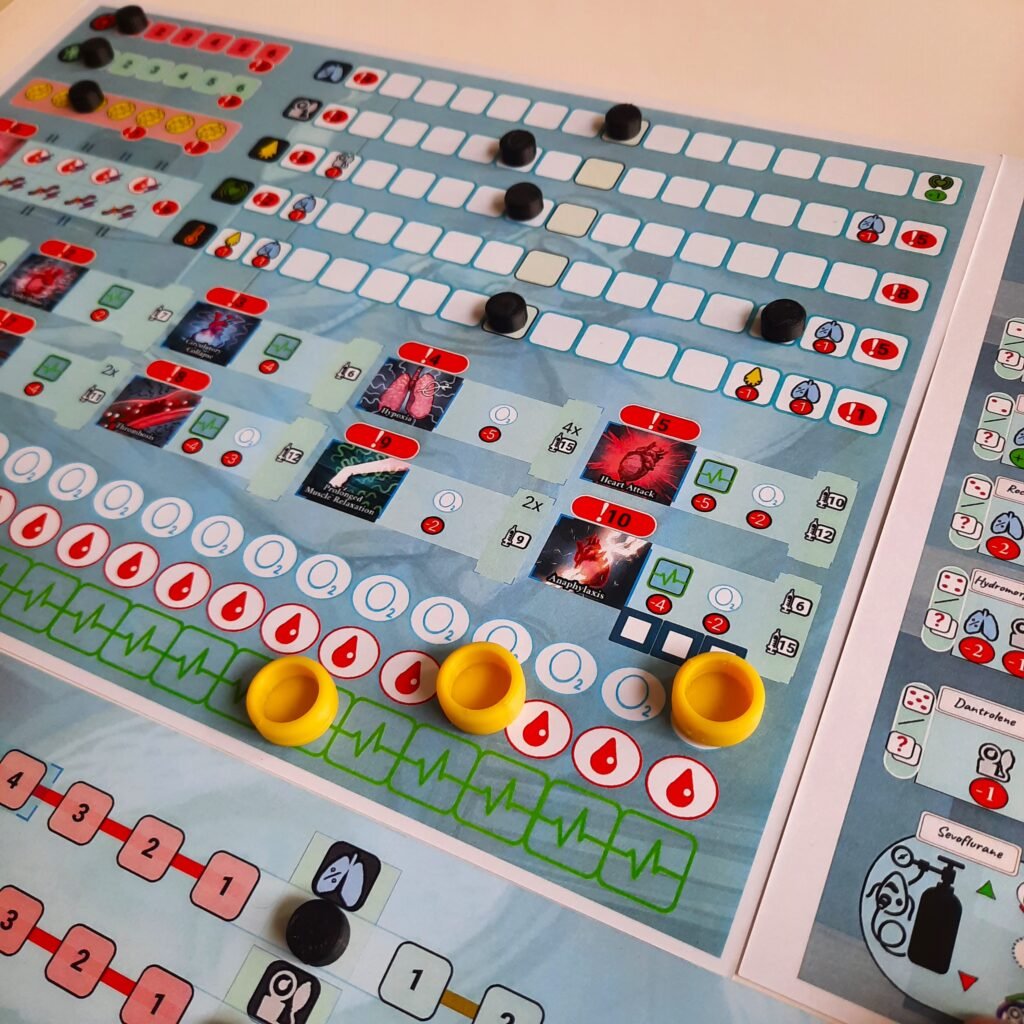
I’m not associated with the medical field by any means, but I was extremely fond of Biology all the way through my A levels. I took both Biology and Human Biology, and even fancied my chances of becoming a doctor until Grade 11. It took one brutal paper in Grade 12 to show me just how demanding that path really is. So I stopped imagining myself in the doctor’s apron, with a stethoscope around my neck. It didn’t stop me from enjoying the TV series set around the field, though. I thoroughly enjoyed House, and The Good Doctor!
Despite giving up on becoming a doctor, I still fondly hold onto one crucial term from the field that I can relate to in everyday life: Homeostasis. It’s the process of our bodies keeping themselves steady despite the external changes, and I feel we can take a leaf out of that and train our minds to maintain the same kind of balance.
A bit on the game
Call The Doctor lets you take on the role of a surgeon, performing complex operations under pressure. Each game presents a unique medical scenario, from removing a brain tumor to treating gunshot wounds, and unfolds step by step: anesthesia, incision, removal, suturing, and awakening. Every stage requires careful choices, as medicines, tools, and patient status all influence the outcome.
The game was designed with input from real surgeons and anesthesiologists to capture what truly happens during surgery. Precision, timing, and resource management are pivotal in every case, making each operation a realistic challenge.
All you need
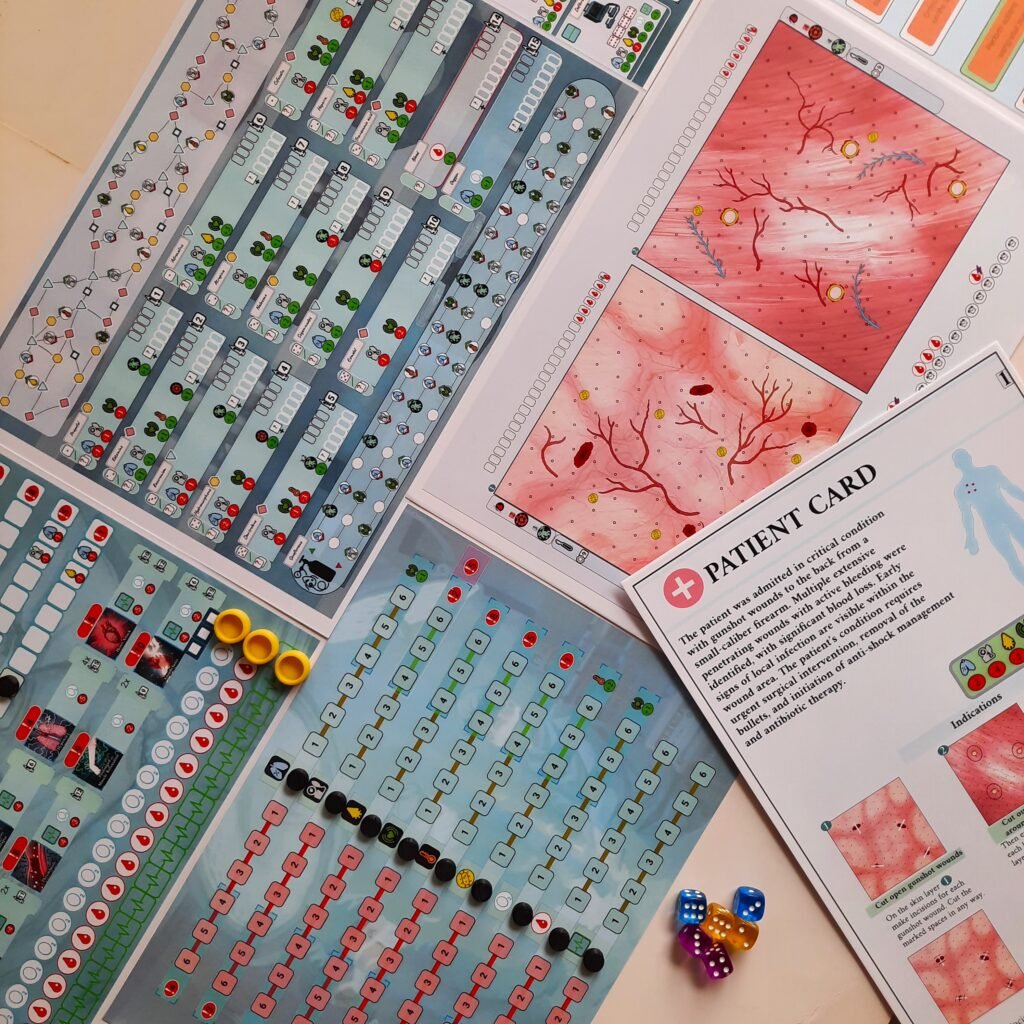
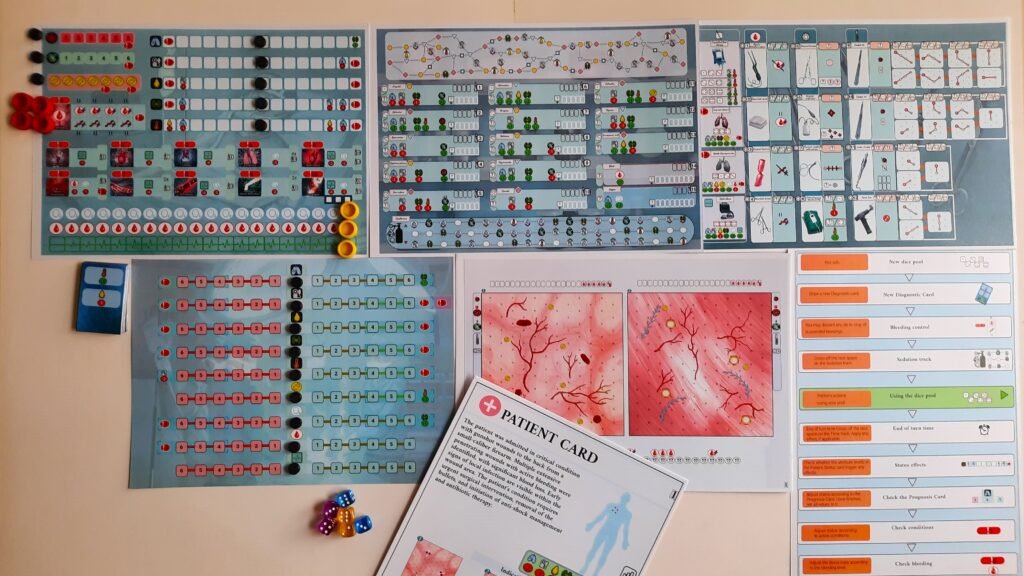
Each operation requires six basic pages plus a couple of Scenario Card pages, so trying one patient means printing at least eight pages. I received three scenarios to try out, which means three unique patients with conditions I need to treat.
The basic pages also include a Diagnostic Deck of 21 cards, though you can choose to use the web app instead, a neat touch I’ve seen Radek try in TownSpire. Beyond that, you’ll need six D6 dice, a marker or pen, and 24 small tokens or markers. These are used to track the patient’s vitals, and you can get creative here. I used my 3D-printed tokens that look like red blood cells to track the blood level!
The prints already give the vibe of how in-depth the game is. Now it’s time to find out!
Entry: After playing the game
Findings
Gripping anticipation
Translating a narrative into gameplay is never easy, especially for a simulation. You want more than factual accuracy; you want it to feel real. And Radek has absolutely nailed this, especially through components like the Prognosis Card.
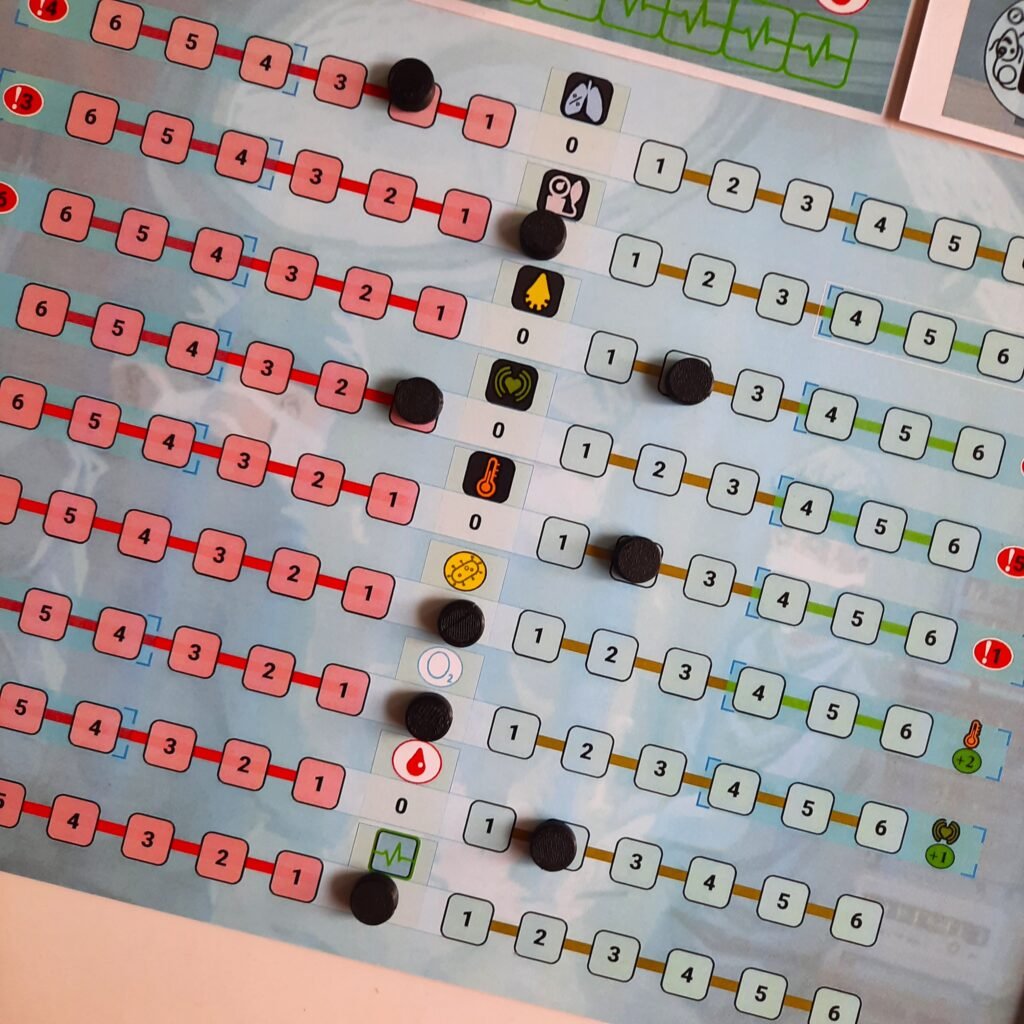
Being on the operating table, every small change causes a reaction and tests the delicate balance of the patient’s body. It doesn’t happen instantly. You track every shift through the Prognosis Card. Whether it’s a random spike in vitals from the Diagnostic Deck, medications used to stabilize the patient, sedation, or the procedure itself, each action passes through the Prognosis Card before it affects the patient.
This gives you a narrow, realistic window to respond to critical changes that could put the patient at risk. For me, that felt like the heart of the game. How well you anticipate the patient’s condition is how well you’ll play. Every choice matters. There’s no moment of doing things just for the sake of doing it.
Interesting dice mechanism
You have a pool of six dice, and they can be used for a wide range of actions: administering drugs, blocking unexpected diagnostics, staunching blood loss, equipping the right tools for the procedure, prepping for extreme cases, and more.
Merely calling it dice placement doesn’t do it justice. You need specific values for certain actions, sometimes double up the dice if you don’t meet the criteria, and occasionally adjust values to fit your plan at the cost of losing time. There are many ways to allocate them, but you only have six dice. You can’t act on impulse. You have to be methodical, just like a surgeon.
The first couple of rounds may feel easy, leaving you with a spare die or two. But that’s no time for complacency. You need to plan and anticipate how you’ll use each die. This ties back to the first point. Anticipation is everything.
A thinking game
Chronicles of Civilization has been dethroned. Call The Doctor is the most in-depth and immersive game I’ve played to date!
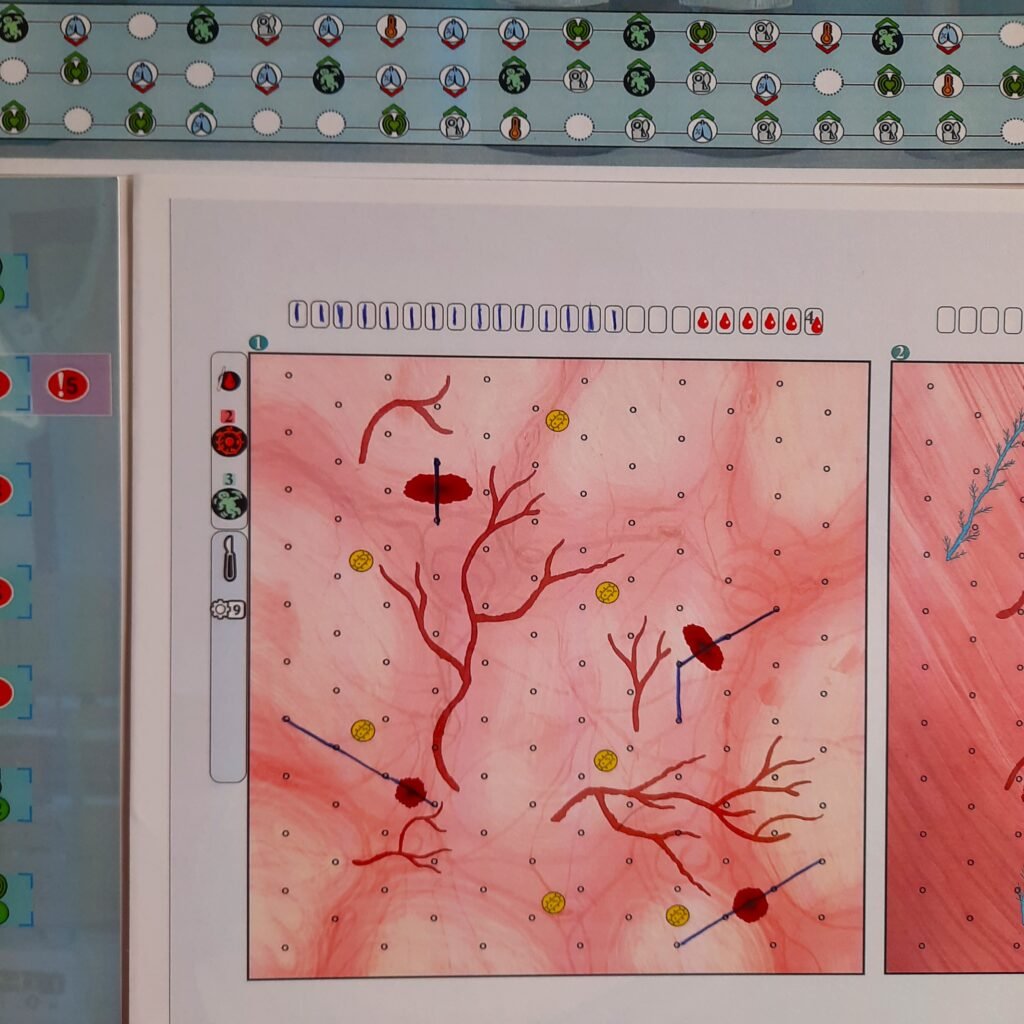
It’s not just about the range of strategy. It’s how vividly the game captures the intensity of saving lives at the operating table. You feel the weight of every move you make. Every medication you administer, every moment you control blood loss after incisions, every critical condition you face, every decision on the sedation and medication track. You think through each step with care because every action shapes how, or if, the patient pulls through.
The more I played this game, the more my respect for the surgeons and everyone in the medical field grew. If this felt intense in a simulation, the reality they face is on a completely different level.
Can you make it?
You only have a week left to back yet another masterpiece of Radek, with its campaign blazing all guns. Are you ready to save lives?
Recommended items
Game Overview
Publisher: Radek Ignatów
Designer: Radek Ignatów
Artist: Michał Teliga
Number of players: 1
Difficulty level: Medium
Rounds of gameplay needed to learn: 1 round
Game duration: 40-60 minutes
Available on: Kickstarter
Theme: Roll-and-Write | Saving lives
Number of pages and color: Minimum 8, maximum 12 (color)
Assembling difficulty level: Super easy. May only need to cut the Diagnostic Deck, unless the web app is used
Lamination: Recommended for replayability
Additional elements required: A pen, a phone if the web app is used, 6 D6 Dice, and 24 tokens
Time to learn: Within 20-30 minutes
Travel-friendly: 10/10
Shelving friendly: 10/10
Rating from PnP Time: 9.5/10

Tas is a game designer and blogger based in Bangladesh, with the dream of exploring the world of games and introducing it to anyone new to it.